The hidden opportunity in returns: Understanding bracketing

Turning returns into a competitive advantage with Reveni
Even if you reduce bracketing, returns will still happen. This is where Reveni comes in. Fast, frictionless exchanges increase the likelihood of customers buying again, while smooth post-purchase experiences strengthen customer retention. At the same time, return data (as shown in the Returns Report) allows brands to identify which products trigger bracketing and improve product strategy, and ecommerce returns management automation centralizes reverse logistics, reducing manual work.
Every return avoided or converted into a new purchase means less shipping, less packaging, and higher margins.
From problem to opportunity
Bracketing isn't the enemy of ecommerce. It's a signal of what your customers truly need.
Brands that act on it can improve size and product experience from the start, reduce unnecessary returns, turn post-purchase moments into loyalty opportunities, and use return data as actionable business intelligence.
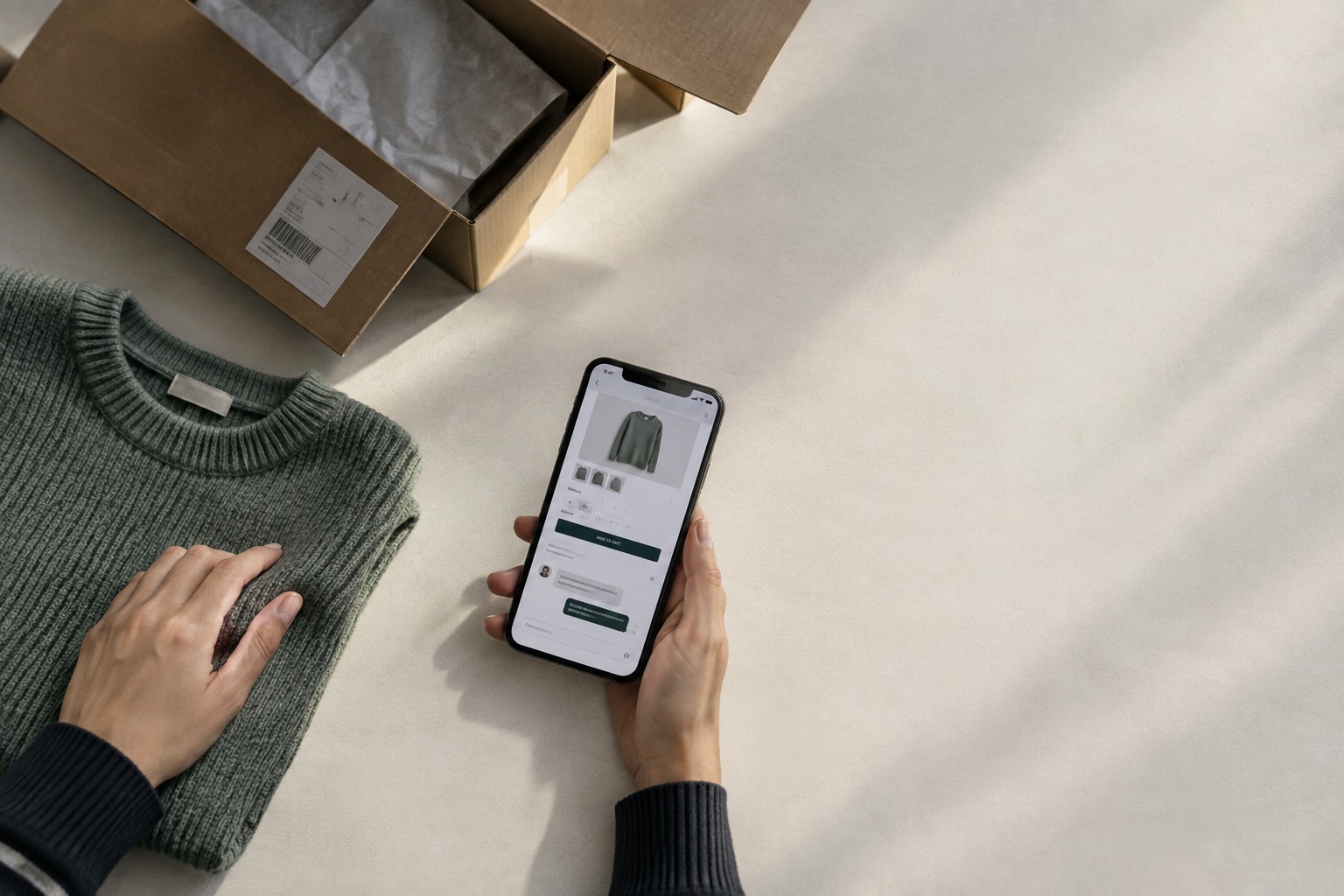
Your customer just ordered the same jacket in three sizes. They'll keep one and return two
You've paid for shipping, packing, and processing three orders for a single sale. Your warehouse handled three pick and pack operations. Your logistics team processed two returns. Your inventory was tied up across three variants for days.
One customer. One purchase. Three times the operational cost.
This is bracketing: one of the costliest habits in ecommerce, yet rarely discussed openly.
A global phenomenon with local roots
Bracketing happens when a customer orders multiple sizes, colors, or versions of the same product intending to keep one and return the rest. It's not fraud, nor bad behavior. It's completely rational.
A customer who doesn't know whether they need a medium or large size does the logical thing: order both and decide when the products arrive. In Germany and Northern Europe, this is known as Bestellkultur, the culture of ordering multiple sizes to keep just one. In Southern Europe and Spain, the habit is growing as ecommerce matures and consumers become more sophisticated.
The numbers speak for themselves: 63% of online shoppers admit to practicing bracketing, and 30% do it at least once a week. In fashion, this leads to return rates above 30%, with real consequences for operational costs, transportation emissions, and margin.
The behavior isn't going away, but its root cause can be solved.
The mistake most brands make
Most brands ask the wrong question: "How do we discourage customers from ordering multiple sizes?"
The right question is: "What information does a customer need to buy with confidence and order only one size?"
Bracketing happens when customers reach checkout without enough information to make a confident sizing decision. The solution is not to make returns harder or more expensive, as this only reduces conversion and damages trust. The solution is to remove the uncertainty that causes bracketing in the first place.
That uncertainty usually comes down to four key areas.
What your product page must offer customers
First, accurate size recommendations. Generic size charts aren't enough. What truly helps are recommendations based on real purchase and return data, personalized for each customer rather than averaged across the catalog. Platforms built for this can reduce returns by up to 24%, and up to 50% for DTC single-size brands. For most fashion brands at scale, ROI is positive within three to six months.
Second, detailed fit notes. A generic size chart tells the customer nothing about how a garment actually fits. For example: "Jacket is narrow in the shoulders. If you have broad shoulders, size up. Sleeve length is standard." These details reduce sizing uncertainty by 15 to 20% without major technology investment, just by knowing your product and describing it honestly.
Third, diverse model photography. Showing only one body type leaves most customers without a meaningful visual reference. Including different heights, builds, and proportions helps customers imagine how the item will actually fit them. This isn't just an inclusivity argument. It's a commercial one. Customers who can see how a garment fits someone like them bracket less.
Fourth, context-rich reviews. A review that says "love it" doesn't help the next buyer choose their size. A review that says "I'm 1.68m, weigh 62kg, ordered size 38 and the hips were slightly tight, so I'll try 40 next time" is real sizing information. Building a review system that captures body context is one of the highest-return investments a fashion ecommerce brand can make: the more reviews with real fit data a product has, the lower the bracketing rate.
AI-powered chatbots or virtual try-on tools can also be integrated into the product page to guide customers in real time. They help visualize fit, resolve sizing doubts, reduce bracketing, and improve the first-time purchase experience.
The sustainability dimension
Reducing bracketing also means fewer ecommerce returns, less shipping, and less packaging. Measmerize reported 860 tonnes of CO₂ saved over four years just by reducing size-related returns.
For European brands, where sustainability increasingly influences purchasing decisions especially among Millennials and Gen Z, this isn't a secondary benefit. It's a commercial differentiator. Customers who care about environmental impact are more likely to choose brands that reduce unnecessary ecommerce logistics movements. Reducing bracketing is one of the most direct ways to achieve this.
Real ROI: A practical example
A Spanish fashion brand with €6M in online revenue and a 28% return rate handles €1,680,000 in returned volume, about 60% of which is due to sizing issues, or €1,008,000. Handling costs on those returns reach €302,400.
Reducing size-related returns by 25% generates €75,600 in management savings, €252,000 in recoverable products, and €150,000 to €300,000 in additional revenue from customers who would have bracketed but now buy once with confidence.
Total recovered value: €475,000 to €628,000 per year.
The cost of a returns management software platform: €40,000 to €100,000 per year. ROI positive within three to six months.
For a brand with €5M revenue and 30% returns, reducing bracketing by 25% recovers €112,000 per year in processing costs alone, not counting inventory freed or improved conversion.
Turning returns into a competitive advantage with Reveni
Reducing bracketing addresses the front end of the problem. But returns will always exist, and how they are managed determines whether they become loyalty moments or loyalty losses.
Reveni turns every return into data: which products, sizes, customers, and reasons. This data feeds directly into product intelligence, helping brands reduce future bracketing through better ecommerce returns management. Every return is not just a transaction. It's a signal of what the product page is failing to communicate.
At the same time, when a return happens, Reveni ensures it's fast and flawless, with instant refunds, instant exchanges, and frictionless reverse logistics processes. The experience turns a customer who returned something into a customer who comes back. A customer who brackets is not a customer to penalize. They simply wanted your product enough to order three sizes. The brand's job is to make the next purchase easier and the return experience so good that the customer stays.
The result: more repeat purchases, higher loyalty, lower operational costs, and a continuous feedback loop that improves product strategy over time. Every return avoided or converted into a new purchase means less shipping, less packaging, and more margin.