Turning Strategy into Action with the Policy Rules Editor
Turning strategy into action with the Policy Rules Editor
Customer acquisition keeps getting more expensive. At this point, that's just reality. What's interesting is that, despite that, most companies are still heavily focused on bringing in new users, while the customers they already have don't get nearly as much attention. Not because it's not important, but because it's harder to execute well.
The gap between what teams want to do and what actually happens
If you talk to any marketing or CRM team, the ideas are usually there. They want to treat their best customers better, drive that second purchase, step in before a high-value customer churns, and stop treating everyone the same. The problem isn't strategy, it's everything that comes after. There is usually too much friction between defining an idea and seeing it live. Engineering dependencies, long turnaround times, and systems that force you to simplify things too much mean a lot of good ideas never make it into production.
Where the Policy Rules Editor comes In
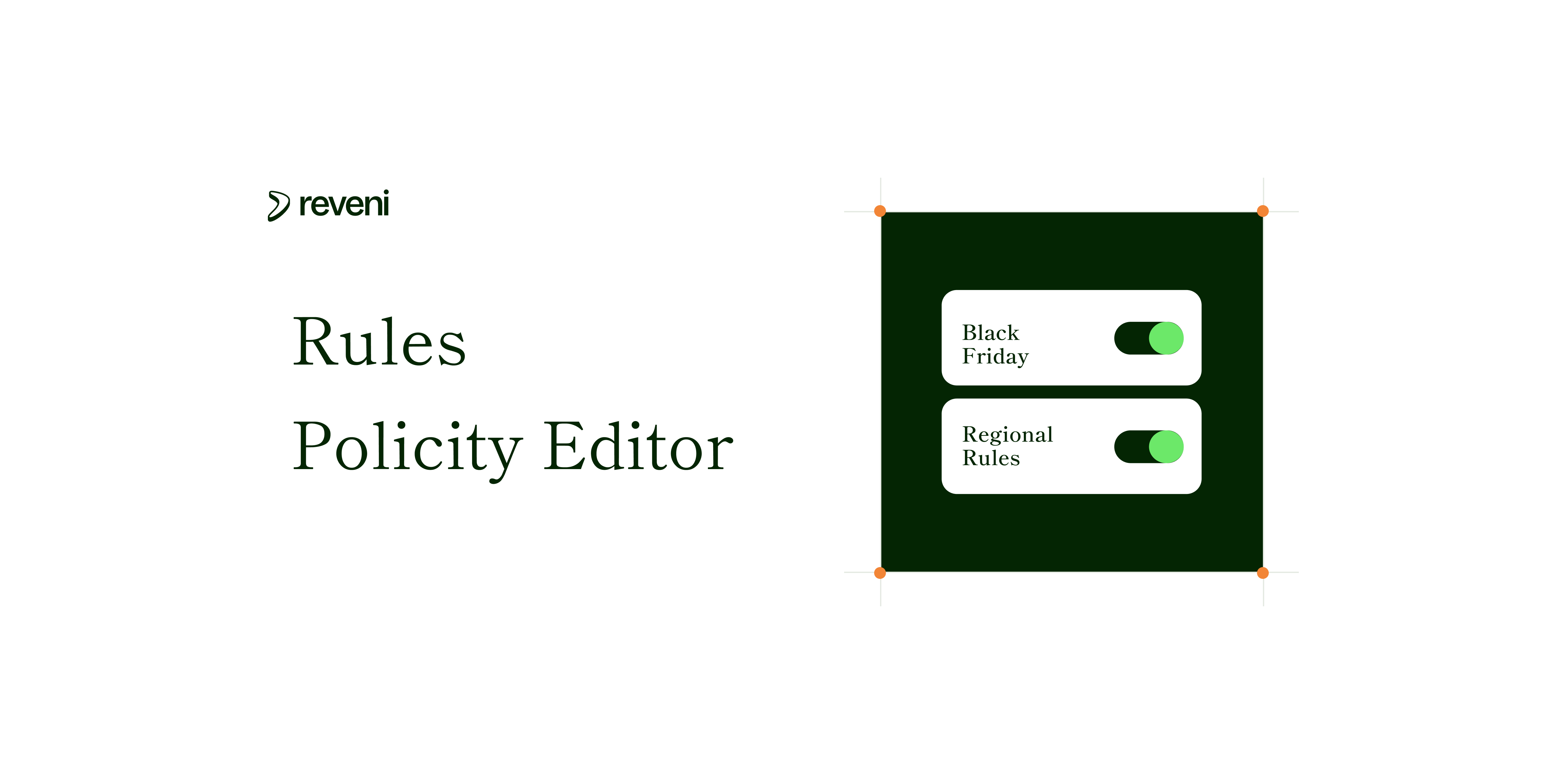
This is where Reveni's Policy Rules Editor makes a difference. Instead of relying on engineering every time you want to adjust something, it lets you define business rules directly, based on things that actually matter, like customer behavior, value, or timing. Those rules don't just sit there, they run. Instead of working with rigid systems that are hard to change, you get something much more flexible. You decide what should happen in a given situation, and it actually happens, without long delays, unnecessary back and forth, or cutting down your strategy just to make it fit.
What this looks like in loyalty
This becomes especially clear when you apply it to loyalty. Many loyalty strategies still rely on fairly generic approaches, with the same incentives, conditions, and experience for everyone. That works up to a point, but it's not very efficient, especially when CAC keeps going up. With a more flexible rule-based setup, you can start being much more intentional. You can give better conditions to high-value customers without building separate campaigns, trigger incentives when someone hasn't purchased in a while, and reinforce key moments like the second or third purchase, where habits actually start to form. It's not about doing more, it's about being more precise.
From static policies to something that can evolve
In many systems, rules are static. You define them once, implement them, and they stay like that for months, even if the business or customer behavior changes. With the Policy Rules Editor, you can adjust as you go — tweak conditions, add exceptions, test new approaches, and adapt without having to rebuild everything. That flexibility becomes really valuable in environments where things move fast, whether it's pricing, demand, fraud signals, or customer behavior. For example, you could offer an extended return period for VIP customers, activate special perks for top-tier clients, or create temporary incentives for customers who haven't purchased in a while. Small adjustments like these can make a big difference in loyalty and retention.
What happens when you remove friction
When teams don't have to rely on engineering for every change, speed is the obvious gain, but more importantly, the way teams work starts to shift. You test more, iterate more, and adjust based on what actually works. That matters a lot in loyalty because there isn't a single perfect setup — it's something you refine over time. The easier it is to change things, the better your end result tends to be.
Where growth actually comes from
If CAC keeps rising, relying only on acquisition becomes harder to sustain. Growth doesn't just come from bringing in more users, it comes from getting more value out of the ones you already have. That doesn't happen through one big initiative — it's the result of many small decisions: when to incentivize, who to prioritize, when to intervene, and when not to.
Not really a loyalty tool, and that's the point
The Policy Rules Editor doesn't really fit into the typical "loyalty tool" category. It's not a points system, it's not a campaign tool, and it's not just another marketing feature. It's more like a decision layer — a way to define what should happen in different situations, and make sure it actually happens. That's what allows loyalty to move from isolated actions to something built into everyday operations. In the end, the Policy Rules Editor is about making those decisions actionable. It turns strategy into something that actually runs, consistently, and adapts to each customer. In a setup where every interaction matters, that's where the difference is made.