What the costume photo doesn't tell you
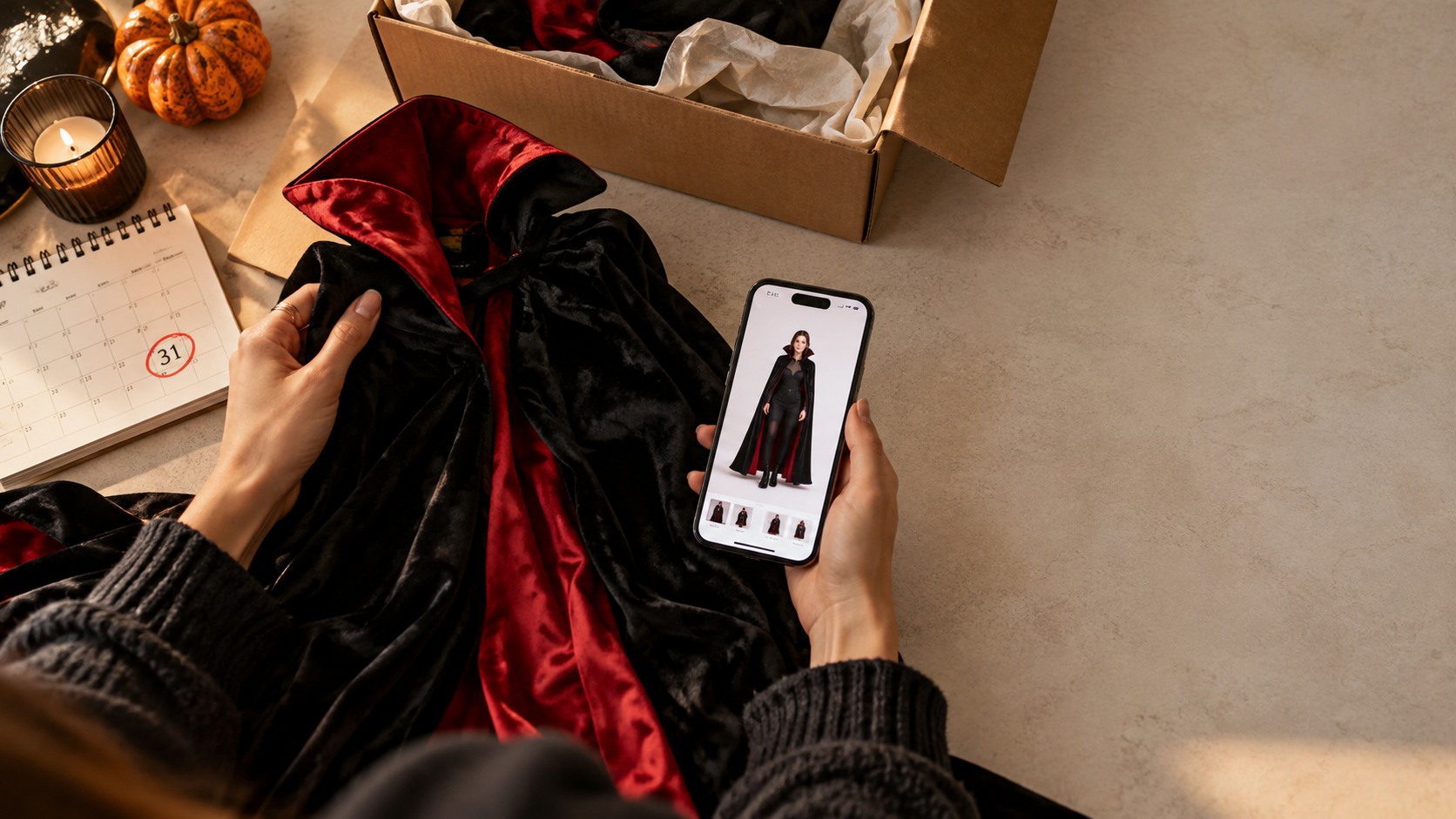
There are 17 days left until Halloween. And the costume is probably one of the riskiest purchases of the year, up there with a New Year's Eve dress or a wedding outfit. It gets worn for a single night, there's a date that can't be moved, and you choose it from the photo on a product page. Here are the three things that can go wrong, and what a shop should be offering you so they don't.

A costume doesn't get bought twice
And this is where online shopping starts to get complicated. You look at the photos, you see how it fits the model, you pick a size and you assume that what turns up will fit you the same way. Often it does. But sometimes it doesn't. And when it doesn't, and the date is that specific, there's no room left to order another one.
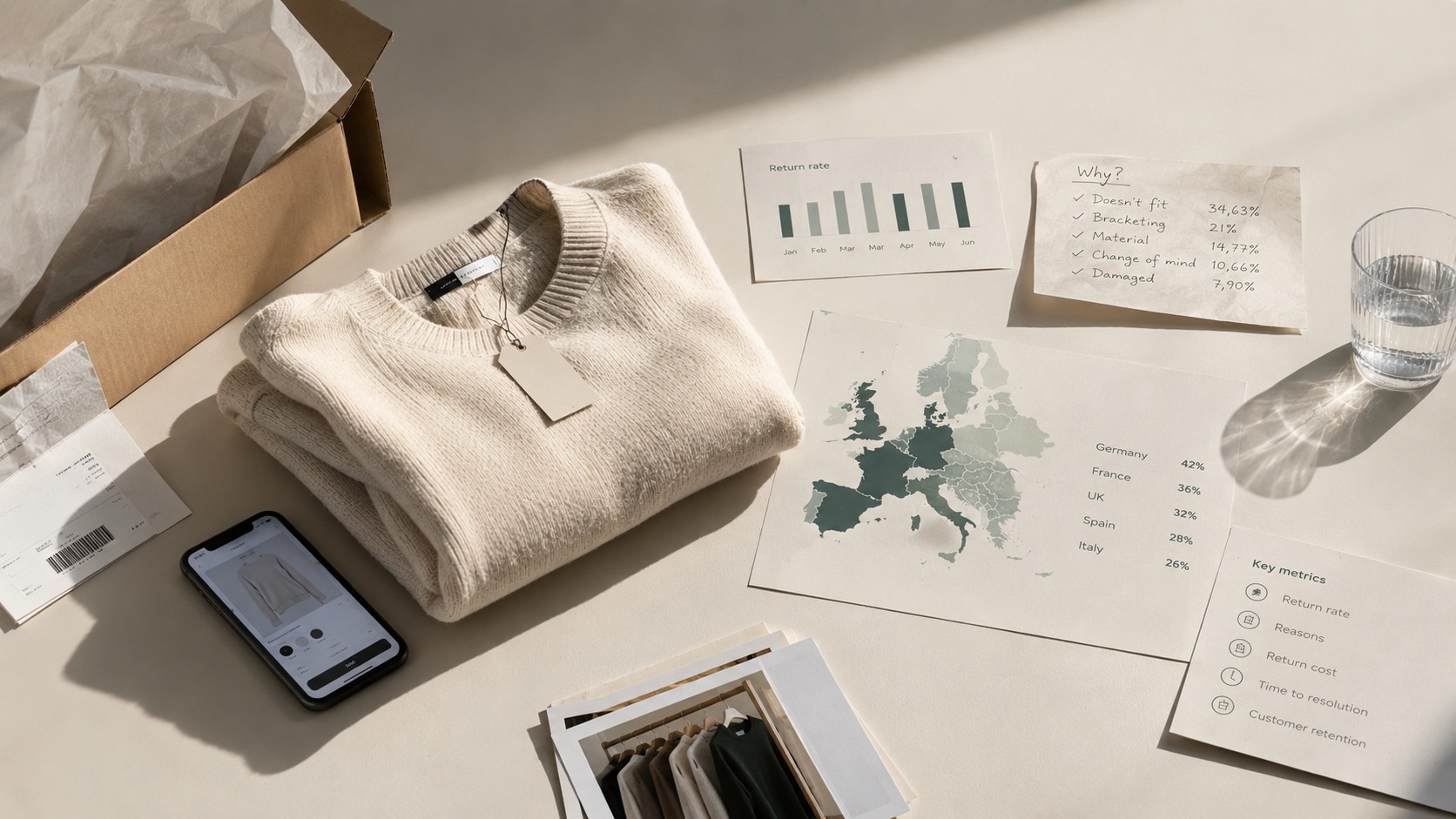
When something gets returned in fashion, the assumption is that the size was wrong, and most of the time that's exactly what happened. According to our State of Returns report, 34.63% of returns happen because the garment doesn't fit the person, and 21% because the customer went bracketing, ordering several sizes at once to decide at home which one worked best. Together, that's more than half of everything that comes back.
And when the garment or the costume is needed for a specific occasion, that matters far more than when you're buying a basic t-shirt. The t-shirt you're not sure about can go back and wait out the process. The costume that doesn't fit gets no second chance, because there won't be another occasion to wear it until next year.
Seeing the garment on you isn't the same as seeing a photo
With a costume the questions are different ones. How the length sits on your body rather than the model's. Whether that size fits you or swamps you. How the fabric falls when you move.
These are questions a size guide doesn't answer, because that isn't what it's for. And a product photo doesn't answer them either, however good it is.
When that doubt goes unresolved, the customer is left with one option: order two sizes and send one back. It's the most common behaviour. Just Style puts it at 62% of British fashion shoppers ordering more than one size to keep whichever fits best. And according to AlixPartners, among shoppers aged 18 to 34 that habit sits behind 38% of their returns, against 14% for the over-55s.
It isn't a whim, it's the only way a customer has of answering a question the shop didn't answer before they paid. The thing is that in October it gets expensive, because every extra size is a parcel that has to arrive, go back out and be processed inside a window that closes on 31 October.
When to buy the costume so it arrives in time
The second risk is easier to grasp: that the costume doesn't arrive in time for 31 October. And the problem is rarely the delay itself, it's finding out when you no longer have room to order another one or think of something else.
And that's exactly what consumers say when you ask them. According to a Locus survey, 93% think a timely heads-up makes up for a late delivery. What annoys people isn't that it arrives late, it's not having known early enough to find an alternative.
And that attention from the customer shows in the numbers. Shipping and order update emails get opened between 50% and 60% of the time, against 20% to 35% for marketing campaigns, according to Salesforce. Nobody pays as much attention to a brand as when they're waiting for something they need on a specific date.
What happens if it doesn't fit
If everything above fails, there's one option left, and it's the one that decides whether that person buys from the shop again. According to our State of Returns report, 93.43% of consumers say a simple returns process matters when buying from a brand for the first time, and 91.39% wouldn't buy again if the experience was a bad one.
With a costume this gets worse, because the margin isn't weeks or months, it's days. A return that takes ten or fifteen working days is no use at all if Halloween is in three. What the customer needs is to sort it out fast, either by getting the money back to look for another costume or by receiving the size that does fit.
In fact, 88% of shoppers prefer an exchange to a refund when the problem comes down to sizing. And with a window this tight, the exchange counts for more than the return.
What a shop should be offering you before 31 October
The three things that can go wrong all have a fix, and all three get solved before the customer has to complain.
The first is showing how the costume actually looks, rather than how it looks on the model in the photo. With Virtual Try-on the customer can try the garment on their own image, in photo and also in video. And the video is what matters here, because it's the only thing that shows the length, how the fabric falls and how it behaves when you move. Exactly what a product page can't tell you.
The second is the customer knowing where their parcel is at all times, without having to ask. Smart Tracking sends automatic updates at every step and flags it when a parcel is delayed or stops moving, with the brand's own tracking page instead of the carrier's.
And the third is being able to sort it out if everything above still goes wrong. With Instant Refund the customer gets their money back in seconds to go and find another costume, and with Instant Exchange the shop sends the right size as soon as they ask for it, without waiting for the first costume to get back to the warehouse. On a purchase with a deadline, those waiting days are exactly the difference between making it and not.
Frequently asked questions
How do I know if a costume will fit me?
A size guide tells you whether that size works, but not how it looks on you. For that you need to see the length, the proportions and how the fabric falls, and a virtual try-on that shows you in video, like Reveni's Virtual Try-on, lets you see the garment on your own body and in movement.
When should I buy a Halloween costume?
With enough room for it to arrive and, if it isn't what you expected, to exchange it. Counting delivery and a possible return, three or four weeks before 31 October is about right. Buying in the final week leaves no room to change anything.
Why are so many costumes returned?
For the same reason as the rest of online fashion, only sharper. According to Reveni's State of Returns report, 34.63% of returns happen because the garment doesn't fit and another 21% because the customer ordered several sizes. With a costume, on top of that, the question isn't only about size: it's how the length sits on your body and how the fabric falls.
What if the costume doesn't arrive in time?
It depends on whether you find out in time. According to a Locus survey, 93% of consumers think a proactive alert makes up for a delayed delivery, so it's worth checking before you buy whether the shop tells you about delays or whether you have to go and check the order status yourself. Tools like Smart Tracking do it automatically.
Can you return a Halloween costume?
It depends on each shop's policy and it's worth reading it before you buy. According to Reveni's State of Returns report, 93.43% of consumers say a simple returns process is decisive when buying from a brand for the first time. On a purchase with a deadline what matters is speed: with Instant Refund you get your money back in seconds to go and find another costume, and with Instant Exchange you get the right size without waiting for the first one to go back.
.png)