
Six types of AI for reducing returns. But they don't all solve the same problem
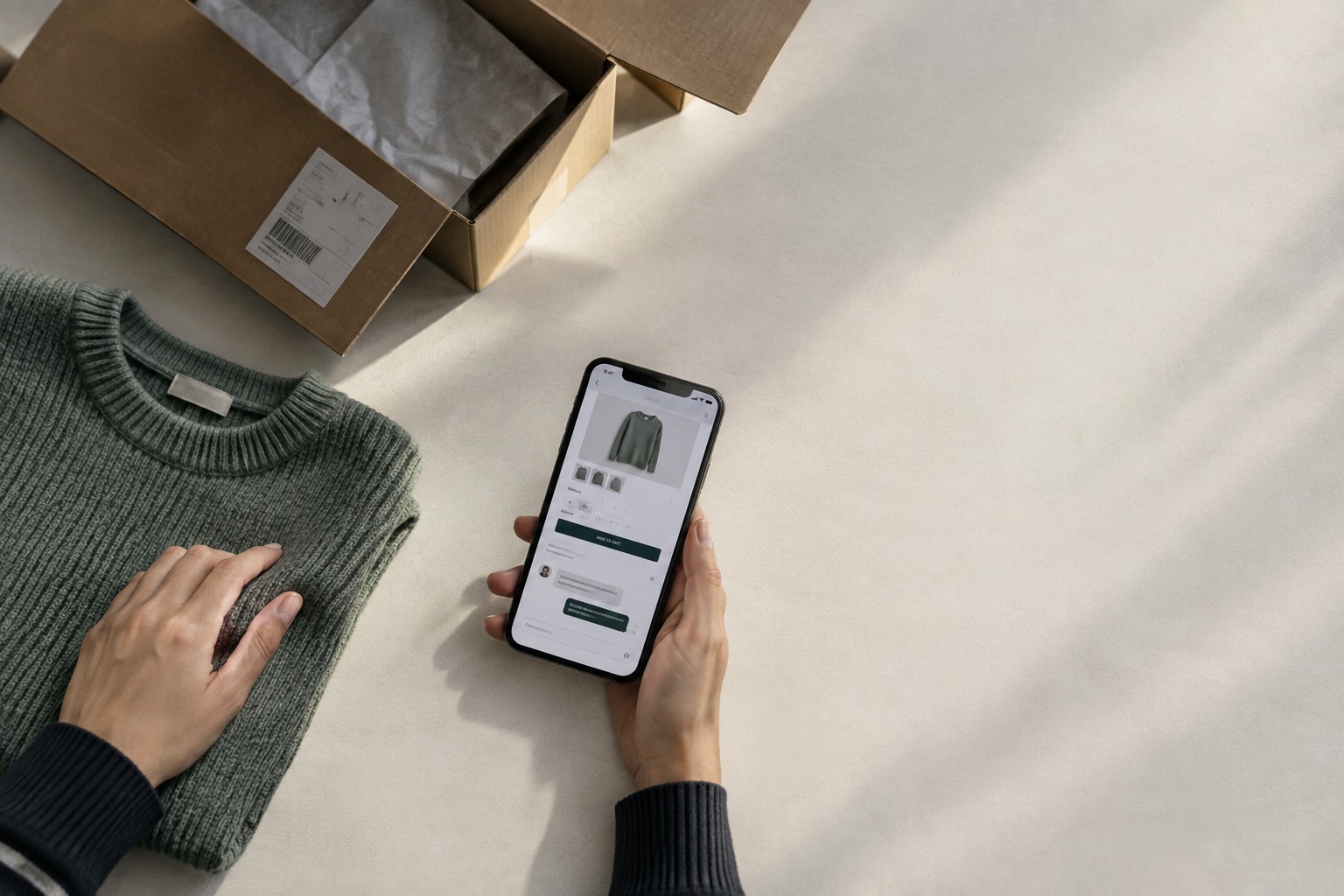
Artificial intelligence is now turning up at practically every stage of fashion ecommerce, returns included. But talking about AI for reducing returns as though there were a single solution flattens the problem. In this article we go through six ways of applying AI and automation, what each one can actually solve, and where in the journey it makes sense to step in.
Six ways to apply AI to reduce returns, and what each one changes
A size recommendation, a virtual try-on, a duty calculator or a tool that automates the return can all use AI and still be solving completely different problems.
What matters is understanding what is causing your returns and where in the journey you can intervene. Stopping a customer from buying the wrong size is not the same job as getting a return that has already happened back into stock sooner.
Six ways to apply AI and automation to returns
Fashion executives put artificial intelligence at the top of the industry's opportunities, ahead of product differentiation and sustainability, according to McKinsey and BoF's State of Fashion 2026.
All of them can be useful. They don't solve the same thing. The right technology depends on what is causing the return and on the point in the journey where you can act.
The problem starts long before the return
Before deciding what technology you need there is a question that sounds simple and that not every brand can answer precisely: why are customers sending things back?
The answer tends to sit across several systems, and in many cases the reasons aren't recorded in a structured enough way to be analysed.
That isn't an assumption. When we talk to fashion brands reviewing their returns setup, the same problem comes up again and again: how the reason for the return gets collected. Often it's recorded by hand, the reports can't be exported, or the numbers on different dashboards don't match. What they need isn't more analytics. It's to be able to collect the data properly in the first place.
Without that starting point it is easy to invest in something that looks promising and find out months later that it was never addressing the main reason for returns.
A brand whose problem is the cost of processing each parcel needs something different from one whose customers keep getting the size wrong. And a brand selling mostly abroad may have a duties or delivery problem that never shows up if it only looks at product data.
So before investing in optimising the returns process, it is worth being clear on at least three things:
- what reasons account for your returns
- what each one really costs to handle
- how long each item spends out of stock because of the return
According to our report The State of Returns, a garment not fitting properly accounts for 34.63% of fashion returns, with bracketing behind another 21%. A good part of the problem gathers around one very specific question: the customer doesn't know with enough certainty how the thing they are buying will look on them.
Those percentages are a sector benchmark, though. What matters is what is happening in your own ecommerce.
Why the figures on reducing returns don't always line up
The percentages circulating in the market are hard to compare. They depend on what counts as a return, what period is analysed, which categories are included and, above all, on whether the figure covers every return or only the ones related to size and fit. Many of them also come from the companies selling the technology. Ourselves included.
The question worth asking is not how much a technology says it can reduce returns by, but which reason it can genuinely affect and how you are going to measure that impact in your own business.
What changes with the new European regulation
Returns can no longer be looked at purely through conversion or logistics cost either.
Since 19 July 2026, the Ecodesign for Sustainable Products Regulation has banned large companies from destroying unsold garments, accessories and footwear in the European Union. The same ban reaches medium-sized companies from July 2030, while micro and small companies are exempt.
The European Commission points to alternatives: better inventory management, reuse and donation, remanufacturing and resale.
According to the Commission, between 4% and 9% of unsold textiles in Europe are destroyed every year, before anyone has even worn them. On returns specifically, it estimates that in Germany alone close to 20 million returned items are discarded each year.
That gives every return a second question alongside what it costs to process: what do we do with this unit now. The faster it can go back into stock or find another channel, the better its chances of holding its value.
But it also reinforces an earlier point: if a return can be avoided because the customer had all the information about the garment before buying, that is still the most efficient option.
AI is also changing how we buy
State of Fashion 2026 sets out a scenario in which AI agents start searching for products, comparing options, buying and tracking orders on our behalf. Handling the return could be the next step.
And it isn't a distant scenario. According to Rewiring retail in Europe: The AI imperative, published by McKinsey and EuroCommerce in 2026, 61% of European consumers already use AI to discover or evaluate products before buying them
For brands, that means information which could previously sit buried across separate pages starts to carry real weight. Price, availability, delivery time and returns policy are all things an AI agent can compare in seconds.
The buying experience no longer only has to be easy for a person. Increasingly it will also have to be structured enough for a machine to read it and act on it.
Where it makes most sense to intervene
The distinction that matters here is between avoiding a return and handling one that has already happened better.
Automation can make the process faster and cheaper. Tracking reduces uncertainty during shipping. Duty calculation prevents a certain kind of rejected international parcel.
But if a significant share of your returns has to do with size, fit or uncertainty about the product, the interesting moment is earlier. A photograph can show what a garment is like, and it still doesn't answer the question that matters most before buying: how will this look on me.
In a shop the customer can try it on. In ecommerce they have traditionally had to decide on far less.
It's also worth saying that not every brand wants to go that far. Some would rather not have AI interacting directly with their customers, particularly where the brand runs on a more personal relationship. That's a perfectly valid position. In those cases, the post-purchase interventions are still on the table.
Tailor, helping customers decide before they buy
In practice these interventions can be combined across the whole customer journey. A brand may need to help the customer choose before buying, reduce uncertainty during shipping and, when a return does happen, make the process as quick and efficient as it can be.
That is where Reveni's different solutions come in.
Tailor combines a virtual try-on with a conversational product assistant inside the shopping experience.
The customer can see themselves wearing a garment, in a photo or on video, and ask about that specific piece: how it runs, what it is made of, how it sits, what happens if they need to send it back.
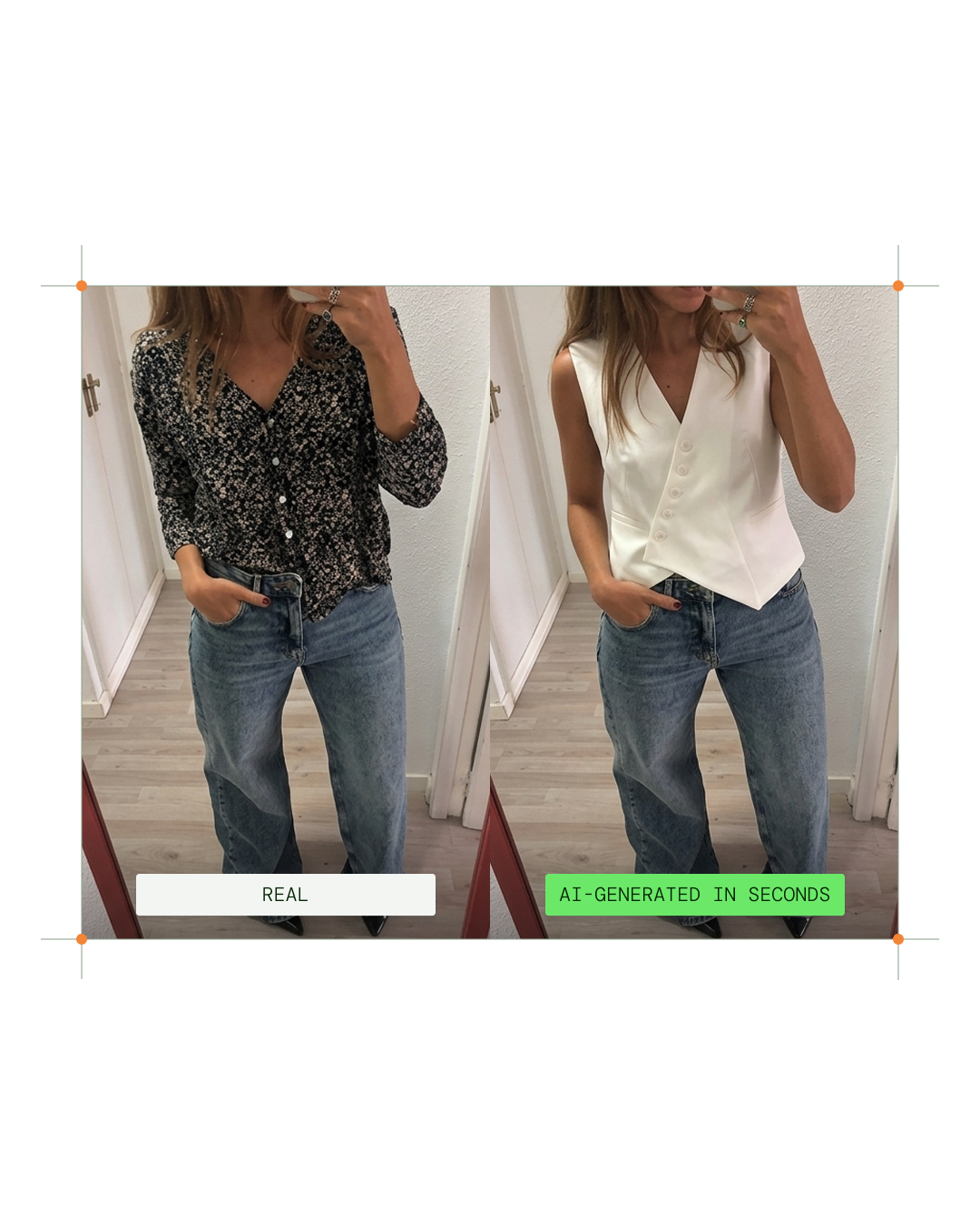
The difference is context. Tailor isn't a generic assistant answering questions about fashion. It works on the product the customer is looking at and on the brand's own catalogue information.
That counts for a lot with new product. A garment that has just launched has no hundreds of reviews telling anyone whether it runs large or small, and no return history to speak of.
The idea isn't to make the return more efficient once it has happened. It is to stop some of them happening at all.
And when the return does happen
Not all of them can be prevented. There will still be size swaps, duplicate orders, transport problems and customer decisions that no technology can remove.
At checkout, Atlas calculates duties and taxes before payment, so the customer knows the final cost and the problems tied to unexpected charges get smaller.
During shipping, Smart Tracking keeps the customer informed with automatic notifications and alerts when an order is delayed. It doesn't prevent the return, but it does prevent the uncertainty and the queries that come with it.
And once it happens, Global Returns automates the process and gives visibility over each unit, while Instant sends the right product out without waiting for the first garment to reach the warehouse. In seasonal categories, cutting that time can stop a unit coming back into stock at the point where it can only be sold at a discount.
Frequently asked questions
Which AI reduces fashion returns the most?
There is no single answer. It depends on why customers are sending things back. If the problem is size or fit, size recommendation and virtual try-on can act before the purchase. If the problem is the cost of handling each return, automation helps afterwards. Before investing in any technology, you need to know what is causing your returns.
Does virtual try-on reduce returns?
It can help reduce the returns tied to size and fit, particularly when the customer doesn't know how a garment will look on them. It does nothing for other reasons, such as late delivery, unexpected customs charges or a change of mind. Its impact should be measured on size and fit returns, not on the overall rate.
How do I know which technology my ecommerce needs?
Start from three of your own numbers: what reasons account for your returns, what each one costs to handle and how long each item spends out of stock. If the reasons aren't recorded in a structured way, any investment decision starts from a hunch.
Can unsold clothing be destroyed in the European Union?
Since 19 July 2026, large companies cannot destroy unsold garments, accessories or footwear in the EU, apart from certain exceptions, such as cases involving safety or damaged products. Medium-sized companies will be subject to the same ban from July 2030, while micro and small companies are exempt.
Does returns automation reduce the return rate?
Not necessarily. Automation reduces the cost and the time of handling each return, but that is different from reducing how many returns happen. A brand can automate the whole process, improve the customer experience and still see the same return rate. To bring it down, you have to act before the purchase.