Fashion doesn't stop at clothes any more
Between May and September, fashion dressed national football teams, reacted to what was happening on the pitch within hours, turned up at festivals and marathons, made the most of Formula 1 landing in Madrid, and ended up building trunks and running a bar in New York. We go through what Patta, Loewe, Silbon, Nude Project, Pompeii, Scalpers, TwoJeys, ME+EM, Burberry and Louis Vuitton did, and what it says about where the industry is heading.
Fashion stopped competing for the wardrobe
Between May and September, more than twenty brands found a new way into the World Cup. Some came at it through the football itself, others through the culture around it, and others used the context to move into territory that has nothing to do with fashion.
The result has been a summer spent in squads, stadiums, festivals, marathons and hospitality spaces, alongside a run of products that sit well outside what we usually call fashion.
The World Cup was the main meeting point, though not the only one. Wimbledon, running and Formula 1 arriving in Madrid all worked as stages for brands to reach new communities and carry their image somewhere else.
Fashion is no longer competing only for space in the wardrobe. It wants to be where its customers already are, part of what they follow, inside the cultural conversations that matter to them.
Dressing a national team
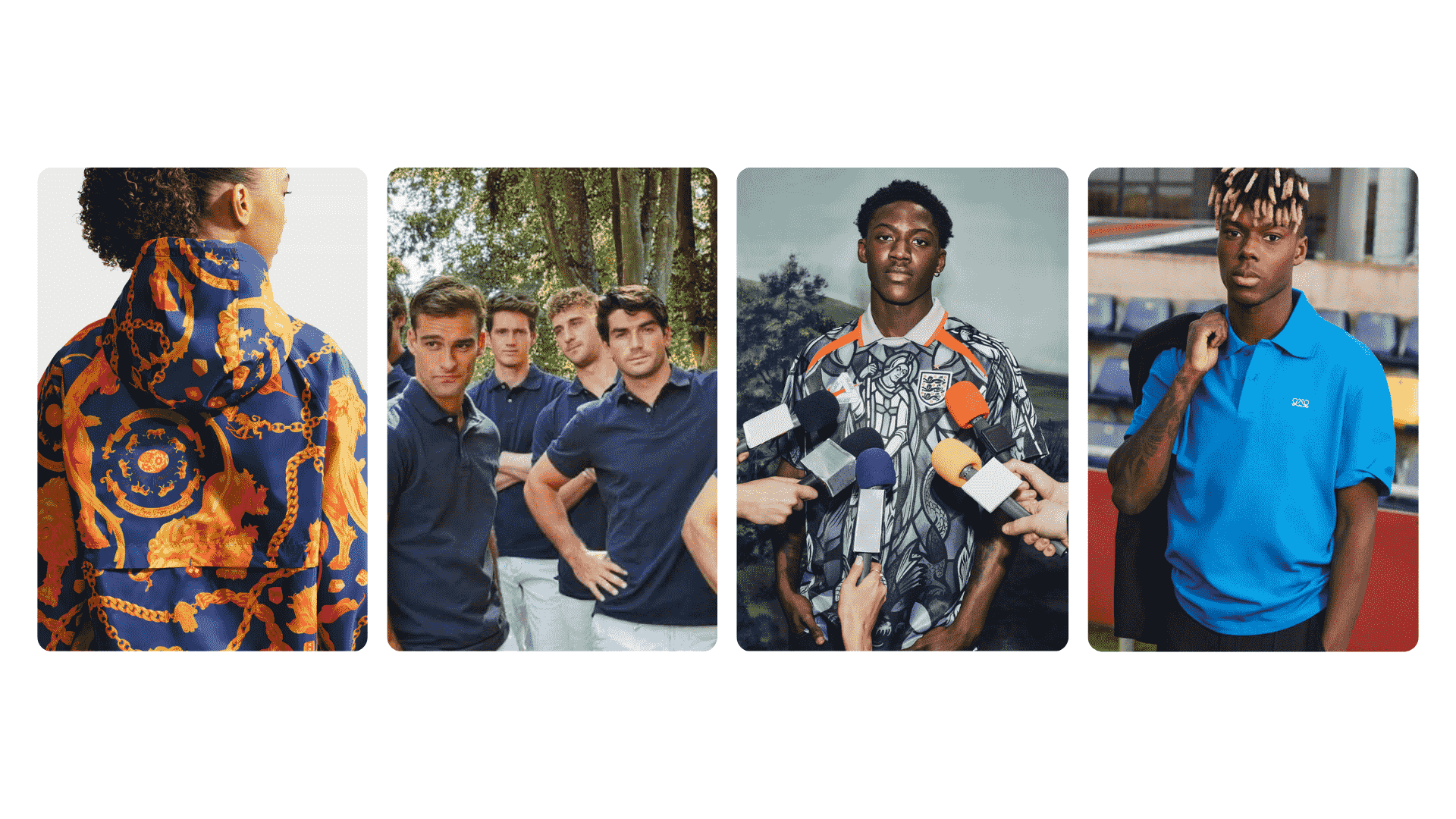
Patta signed the Netherlands collection with Nike. What began as a sneaker shop in Amsterdam in 2004 ended up taking its own dress codes onto the pitch. And it wasn't the only one to do it this World Cup.
Nike didn't stop there. It also brought six more national teams together with six designers under its X2 programme: Palace with England, Jacquemus with France, NOCTA with Canada, Slawn with Nigeria, PEACEMINUSONE with South Korea and V.A.A. with the United States. Each collaboration starts from the identity of the team and reinterprets it through the language of a different culture.
And that's exactly where it gets interesting. Nike built seven conversations around the World Cup rather than one. Palace pulls England towards British skate and streetwear. Jacquemus reads France through an entirely different set of codes. Patta connects the Netherlands to Amsterdam's urban culture.
The product? Still football kits, true. What changes is how each one is read.
Off the pitch, the same strategy repeats. Loewe became the house dressing the Spanish national team, with a full wardrobe of tailoring, casualwear, footwear and leather goods to travel with the squad through its international tournaments, starting with the 2026 World Cup.
And Silbon took that same reinterpretation into another sport. The Córdoba label dressed the Spanish hockey team during the FIH World Cup, held in Belgium and the Netherlands in August.
Reacting to what has just happened
Some brands don't wait for the moment to arrive before they say something. They react while it's happening and turn what surrounds the event into a reason to launch.
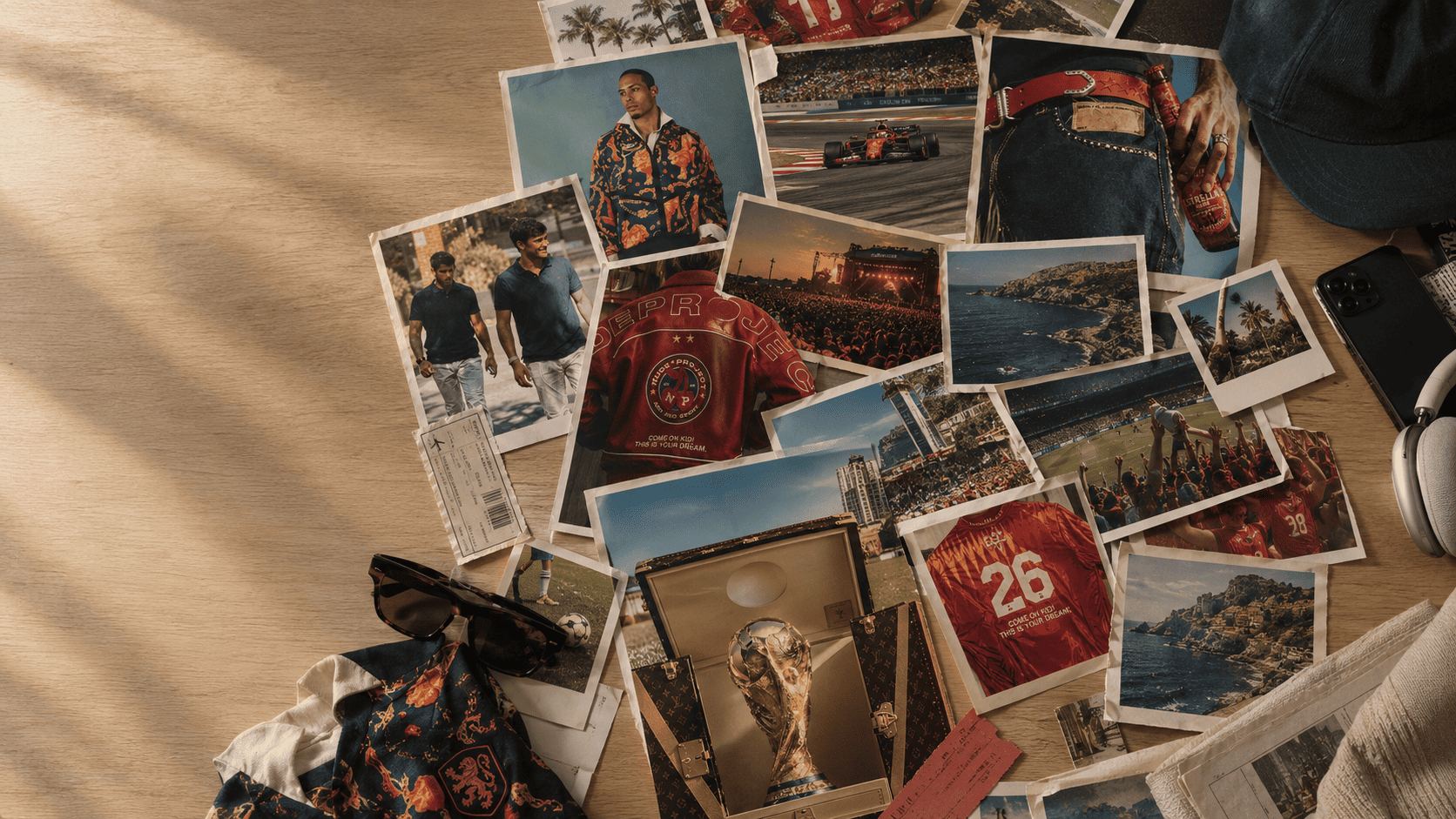
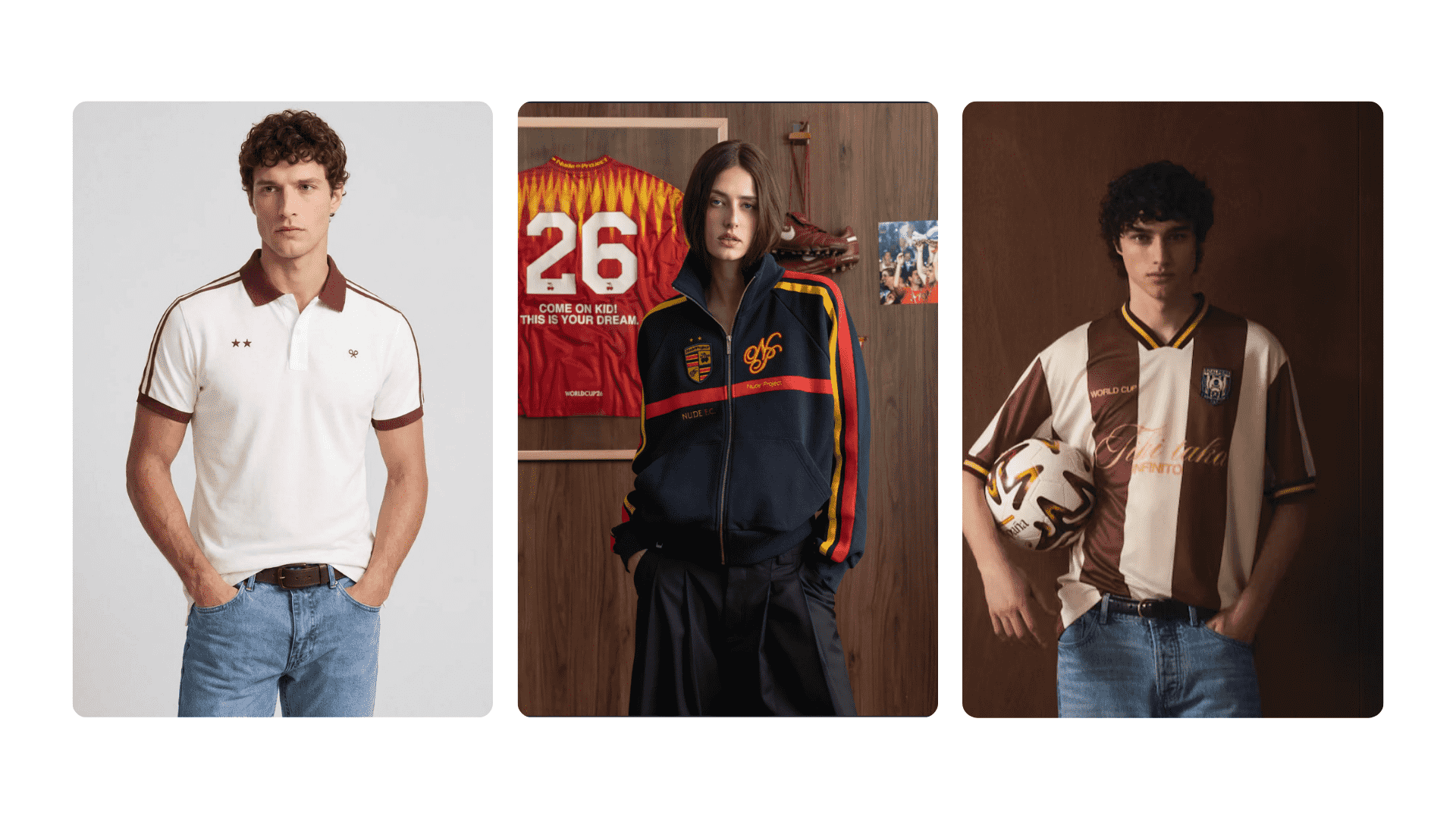
Nude Project took that into the clothes with a capsule tied to the national team's results. Some of the exclusive pieces came with tickets to the final, so what happened on the pitch decided what reached the customer.
Silbon, meanwhile, released a commemorative polo after Spain beat Argentina. The same brand that had dressed the Spanish hockey team appeared a few hours later in a completely different context, riding the celebration.
Pompeii released a World Cup capsule of its own, while Scalpers built its version around four national teams and four sets of terrace codes. Spanish tiki-taka, the Portuguese "a vitória é nossa", "Scaloneta mode on" for Argentina and "tricolor imparable" for Mexico do more than decorate a shirt. They land immediately with anyone who shares those cultures.
In all of these, having something to say counts for less than arriving in time, while what has just happened can still become a product someone wants to own.
The advantage of racing at home
Up to here, brands were reacting to a result. A few days ago, they reacted to an address.
The Spanish Grand Prix ran from 11 to 13 September at Madring, Madrid's new circuit, and several Spanish brands treated the championship's arrival as what it was to them: something happening in their own city.
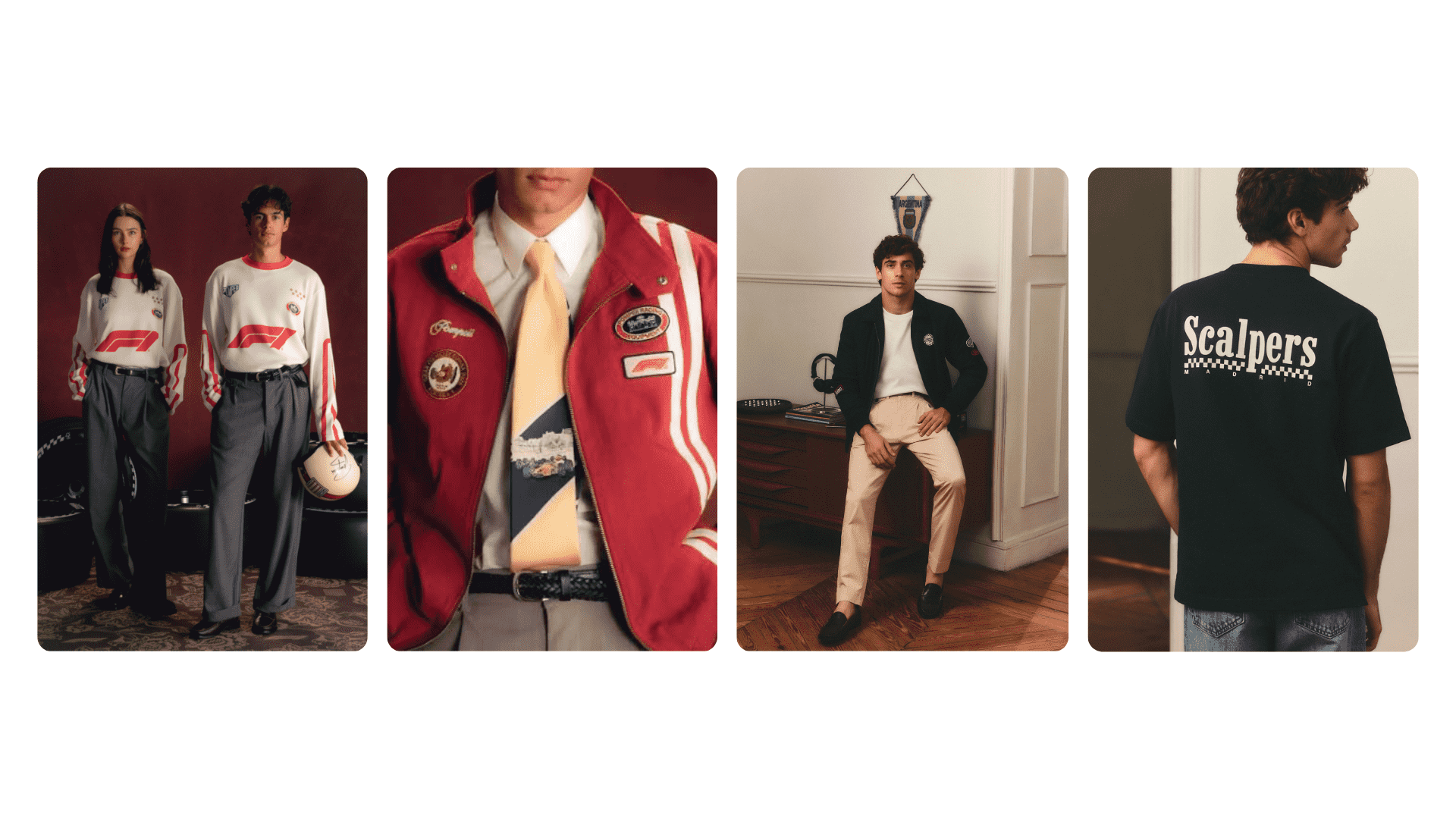
Pompeii signed a capsule with Formula 1 itself. Thirteen unisex pieces that carry motorsport's visual codes into streetwear rather than technical kit: a pit crew jacket, a mechanic's shirt, a Glove tee. It sold through both F1's and the brand's own online stores, and its Madrid flagship spent the four days of the Grand Prix as an exhibition of archive photography.
"Sport has always been an essential part of Pompeii. We're constantly inspired by the culture around it, not just what happens on the pitch, the track or the circuit, but everything that exists around it," said co-founder Cosme Bergareche.
Scalpers came at it from the city rather than the circuit. Its Driving Force capsule starts from Madrid landmarks, with nods to the Paseo de la Castellana and the M-30, fronted by Franco Colapinto, a brand ambassador for several seasons now. The car isn't the subject. The city is.
They weren't alone. Pull&Bear crossed motorsport aesthetics with Disney, and El Corte Inglés ran seven pop-ups across Madrid over the weekend.
What's interesting here is that none of these brands has anything directly to do with motorsport. What they share is a one-off date in Madrid's calendar.
Being where people already are
Not everything happens in a stadium. This summer several brands chose to be in the exact place their customer already was.
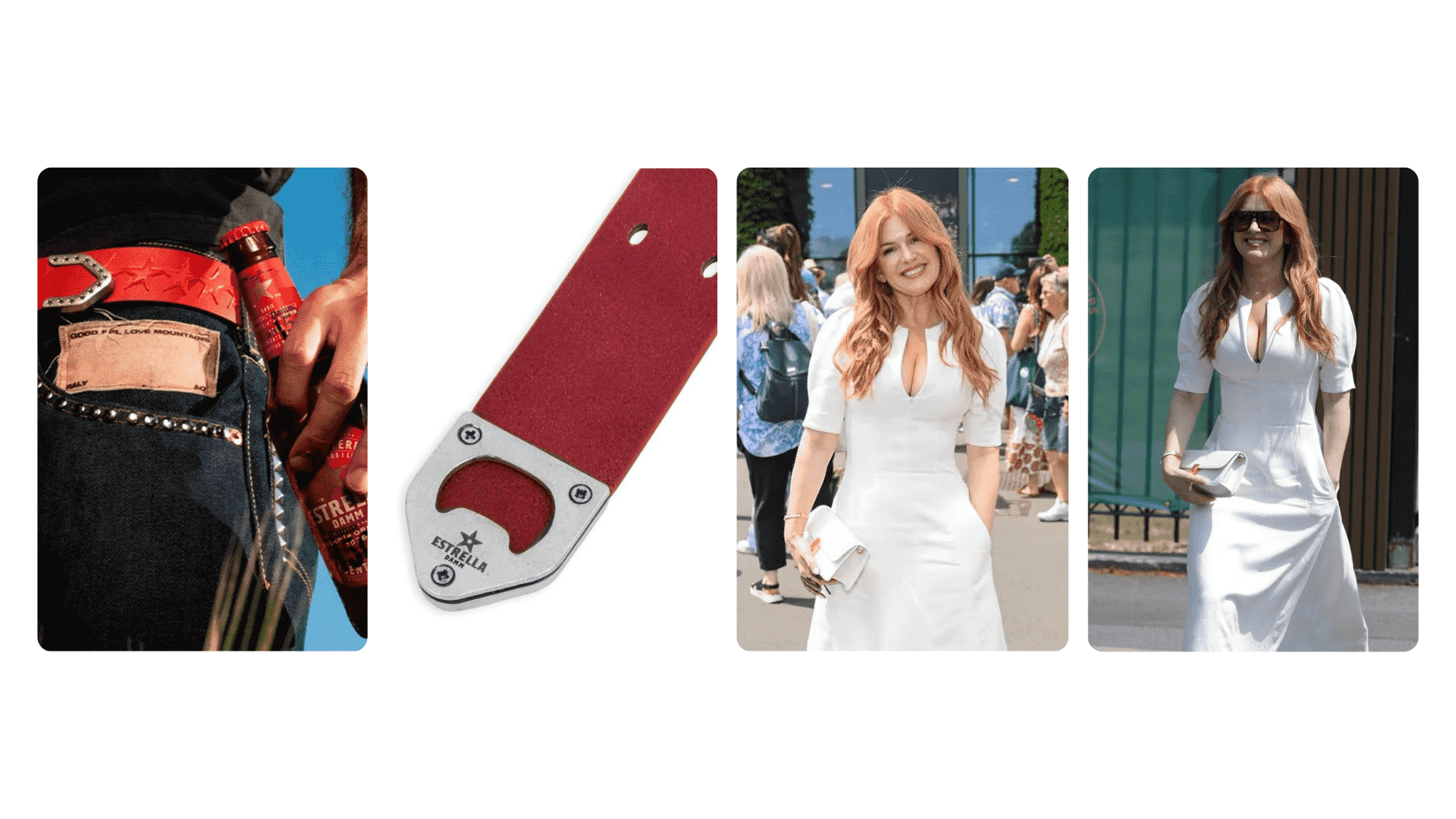
ME+EM built its content around Wimbledon, working the visual codes of tennis in the middle of the tournament.
TwoJeys took its Estrella Damm collaboration to Sónar with a belt that doubles as a bottle opener. Two brands from very different categories in a single object made for the festival, and one of the most visible accessories of the summer by the end of it.
Two very different events, running on the same logic: go to the audience instead of asking it to come to you.
When the product stops being clothing
Brands don't need a collection or a garment to be part of the conversation. Sometimes the right product, the right place or the right moment is enough.
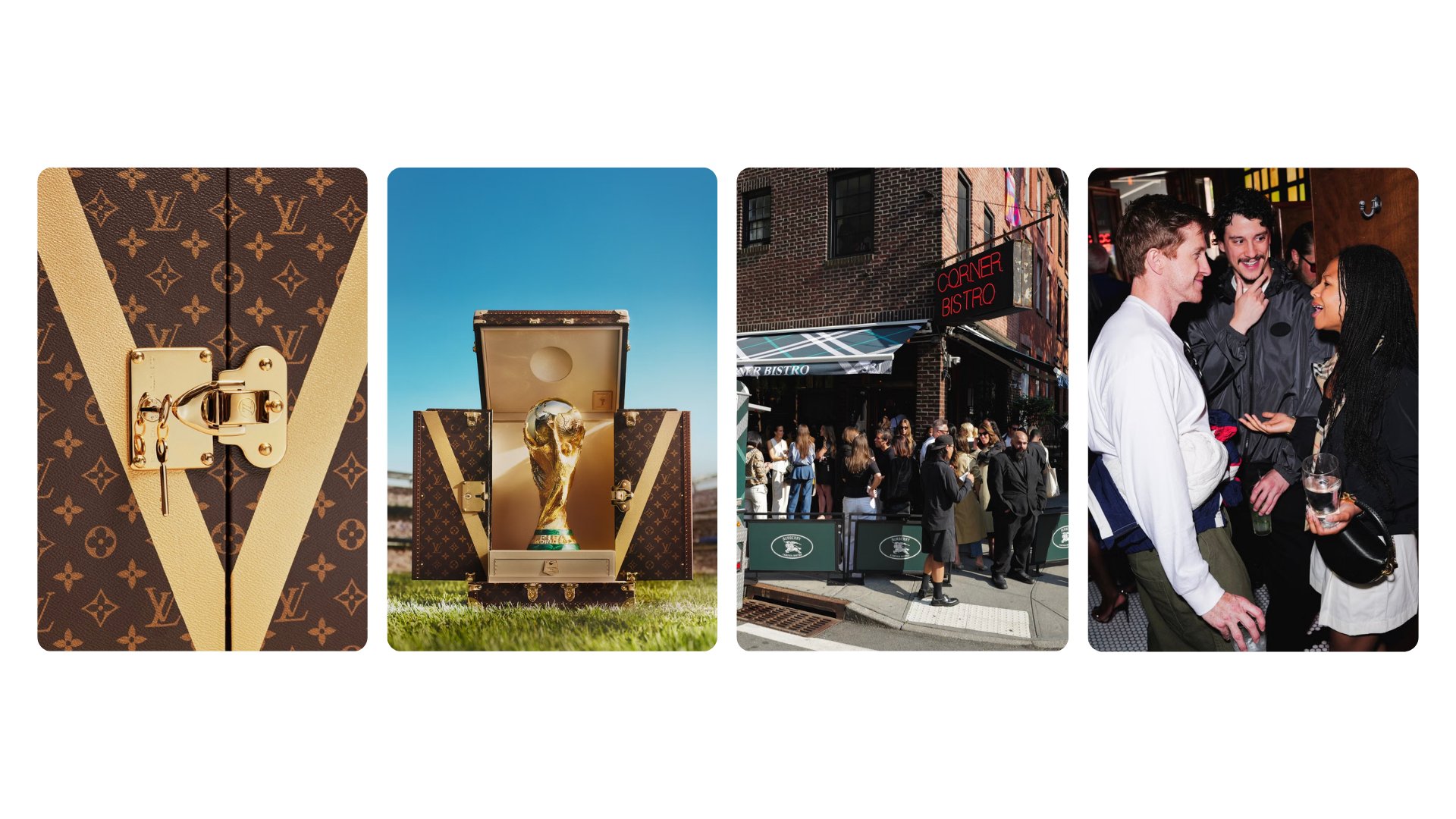
Louis Vuitton was once again responsible for the trunk that carries the World Cup trophy, a relationship the maison has spent years building around major sporting trophies. It holds a multi-year collaboration with Formula 1 and in 2026 it also made the trunks for the trophies at the individual Grands Prix.
And Burberry took the idea further still. During the World Cup, the British house took over the Corner Bistro, a burger bar in New York's West Village, and turned it into a meeting point around the tournament.
The two have something in common. The product stops being the centre and becomes a way into the conversation. It can be an object attached to an event, or a place. What matters is that it makes sense inside what's happening, and to the audience that's already there.