Black Friday doesn't end in November

Black Friday is one of the biggest selling moments of the year. But a chunk of those sales ends up back in your warehouse in January. We spoke to Cillian, Head of Growth Strategy at Reveni, about why that happens and what can be done before it does.
Of everything you sell on Black Friday, how much is still there in January?
On Black Friday you don't have to fight for your customers' attention. They turn up ready to spend, and that week the traffic to your site is going to grow dramatically.
But more traffic doesn't mean more sales, and more sales doesn't mean more money either. What counts is how many of those purchases stay put rather than turning into returns, and you won't know that until January.
Does the shopper buy what they actually need? Do they keep it? Do they come back?
The brands that come out of Black Friday best aren't defined by the biggest discount or the biggest sales volume. They're defined by having worked on their operations beforehand, so Black Friday doesn't just sell more, it earns more.
And there are three things that explain why:
- New customers arrive who don’t know your sizing and order two just in case.
- That doubt could have been answered before they paid, and it wasn’t.
- And when the order comes back, what drops isn’t the cost, it’s what you keep.
According to our State of Returns report, 34.63% of fashion returns happen because the garment doesn't fit and another 21% because the customer ordered several sizes at once. Between them, more than half of everything that comes back.
Black Friday can bring you plenty of sales. The question is how many are still yours in January.
Why bracketing surges on Black Friday
Bracketing is when a shopper orders several sizes or colours of the same product, planning to keep one and send the rest back. In November that counts as a sale, so you don't see it until the parcel is back in the warehouse.
Look at it from the shopper's side. Plenty of Black Friday customers don't know your brand, or whether your medium is the same as the medium at the brands they usually buy from. They're buying in a rush and the discount makes ordering two sizes cheap, so they order both planning to return one.
For the brand, though, that isn't a sale. It's an order that's coming back, and in the meantime it's holding stock, it's generated one shipment and it'll end up generating another one in return.
And on Black Friday that behaviour concentrates. According to AlixPartners, among shoppers aged 18 to 34 bracketing sits behind 38% of their returns, against 14% for the over-55s.
Bracketing surges exactly when your order volume surges. And that's where it starts to get expensive.
What you lose isn't the sale, it's the profit
This is where brands tend to read the numbers wrong.
What you paid to bring that customer in back in November is already paid. That doesn't change. What changes is how much you're left with at the end.
Because when the order comes back, you've paid for the ad that brought them to the site, the shipping out, the shipping back and the whole cost of handling the return. And sometimes you lose the customer too, because a first purchase that ends in a return isn't the best start to a relationship.
A return doesn't make what you paid more expensive. It cuts into what you earned.
Sorting the doubt before payment
Before, every time. Once the customer has paid, all you can do is limit the damage: make the return easy and offer an exchange so you don't lose them. That matters, but it's fixing something that has already gone wrong.
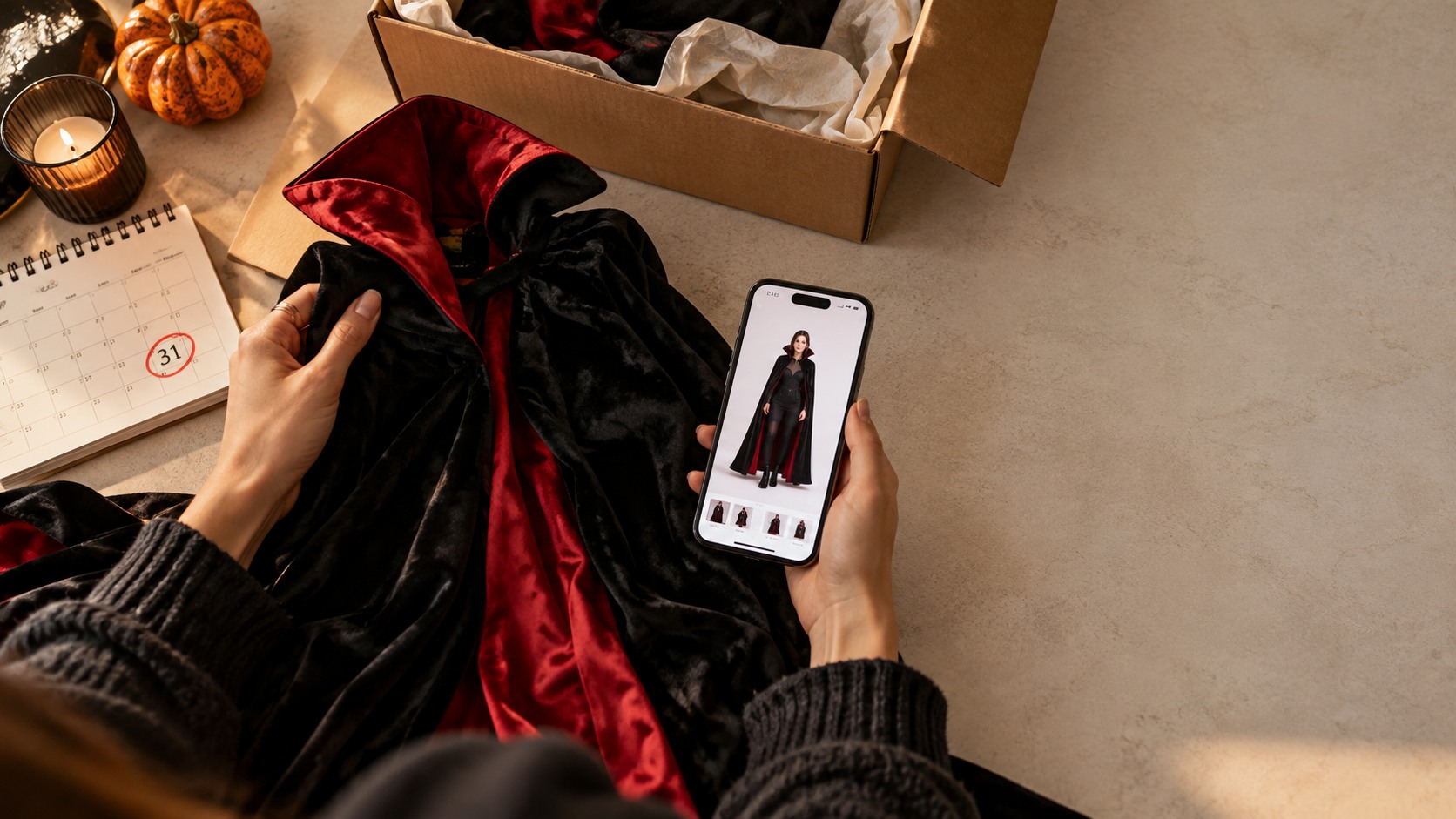
Before checkout you're still in time to prevent it. That's where Reveni's virtual try-on comes in, helping someone who has never bought from you see how the garment looks on them, right there on the product page. So they buy one size confident instead of two just in case.
It's the reassurance a good shop assistant would give, at Black Friday scale.
When the size is wrong anyway
Because it's going to happen. The try-on reduces size-related returns but it doesn't eliminate them, and what matters then is what you offer the customer.
With Instant Exchange the right size goes out the moment the customer asks for it, without waiting for the first one to come back. And that changes the outcome quite a bit: with a refund you lose the whole sale, and with an exchange at least part of it stays with you.
A refund takes the whole sale. An exchange keeps it.
Rethink what a good Black Friday looks like for you
Mostly by changing what you measure. In growth we love Black Friday for those enormous numbers you see straight away, but what you actually keep as revenue in your ecommerce you won't know until January.
And once you measure your results that way, your decisions change for the rest of the year. You start looking at product changes, size guides and everything that happens before checkout. And you also start planning for the returns, because some are going to come anyway.
Plan Black Friday with January's numbers in mind, not November's.
How premium brands can take part in Black Friday
For a premium brand, Black Friday almost always ends up being an argument about how much to discount. And I think the better question is a different one: how to capture that volume without cheapening the experience.
Premium has a lot to do with trust. The customer assumes the product is good and that buying it will be easy. If their first contact with you is ordering two sizes, sending one back and waiting weeks for the money, that does far more damage than 10% off.
So protect the experience at both ends. Help them get the size right before they buy and, when something does have to go back, make returning it as easy as buying it.
A discount does less damage to a premium brand than a bad first experience.
Three tips for reaching January with fewer returns
- Show the garment before the customer has to imagine it. The virtual try-on generates the image and the video of how that piece looks on that specific person, not on the model in the product shot. And Tailor, the conversational agent, answers what an image can't: how that garment runs, what it's made of or whether there's another colour.
- Put the information where the decision happens. Clear size guides and fit details on your best sellers, on the product page and near the buy button, not in a dropdown at the bottom.
- Treat the Black Friday customer as the start of a relationship. They're new, and if their first order goes well and they keep it, you've got a far better chance of them coming back next time.
What you can still change by mid-October
If you're reading this in October and feeling behind, don't worry. You have more room than you think, especially online.
Some things are already fixed. Your stock is ordered, your dates and discounts should be more or less set, and this isn't the moment to rebuild the site or change platforms.
What you can still improve is what the customer finds when they arrive: clearer size guides, better fit information on your best sellers, photos that show how the garment actually looks. Small changes that make a real difference when the traffic multiplies.
And if you want to go a step further, the virtual try-on and Tailor switch on in days, not months. They're exactly the two things that tackle the doubt that ends up becoming two sizes: one shows how the garment looks on them, the other answers what the image can't.
And you can change how you measure it. Agree with your team now that the number that counts is January's. It costs nothing and it can change a lot of the decisions you make over the next six weeks.
By mid-October you can't change what you're selling, but you can change how confidently people buy it.
And for all the returns you won't be able to avoid, sort out the process
However much you try to solve before the purchase, some of those orders are going to come back. And what happens over those few days says far more than it looks, because it's the last stretch of the experience the customer is going to remember.
The money comes first. The norm in ecommerce is to wait for the parcel to reach the warehouse and be checked, and that's usually seven to ten working days which, counting weekends, end up being fourteen. In January, with the volume of Black Friday returns, those timings can stretch even further. But with Instant Refund the refund is approved the moment the customer requests the return, and the money is in their account in 2.5 seconds, before the parcel has even left their house.
The second part is what you offer before the refund. If picking the size is what went wrong, the customer would rather have the other size than the money back. And with Instant Exchange that size goes out the moment they ask for it, without waiting for them to send the first one back.
This isn't only about operations. A customer who gets their money back the same day, or who can swap the size, comes out of that return thinking your brand is a safe, easy place to buy from. And that's the feeling that brings them back next campaign.
A return isn't the end of the sale. It's the first real test you put your brand through.
In short
Black Friday brings the biggest numbers of the year, which is exactly why it's so easy to look only at those. I'd look at how many of those customers are still there once the wave of returns has passed.
The best Black Friday isn't the one that sells the most. It's the one that still looks good in January.
Cillian, Head of Growth Strategy at Reveni
Frequently asked questions
What is bracketing in ecommerce?
Bracketing is the practice of ordering several sizes or colours of the same product, planning to keep one and return the rest. It surges on Black Friday because brands take on lots of new customers who don't know their sizing, who are buying in a rush, and for whom the discount makes over-ordering cheap. According to Reveni's State of Returns report, it accounts for 21% of fashion returns.
How do Black Friday returns affect profitability?
They cut into it. What you paid to bring the customer in is already paid and doesn't change, but when the order comes back you've also taken on the shipping out, the shipping back and the cost of handling the return. You've spent the same and kept less.
Which metrics should you use to measure Black Friday?
What's left in January, once the returns have been and gone, rather than gross sales. Setting that target from the start changes decisions for the rest of the year, because it makes you look at size guides and everything that happens before checkout.
How do you reduce your return rate before the purchase?
By answering the doubt on the product page. A virtual try-on shows how the garment looks on the customer themselves, in photo and in video, and a conversational agent like Tailor answers what an image can't: how that piece runs, what it's made of or whether there's another colour available.
How does the returns process affect customer loyalty?
Far more than it looks, because it's the last thing the customer remembers about the purchase. A refund that takes two weeks leaves the impression that a brand is slow at exactly the point where the customer has neither the product nor the money. With Instant Refund the money is back in 2.5 seconds from the moment the return is requested, and with Instant Exchange the right size goes out without waiting for the first one to arrive, so the sale is retained rather than lost.
What can you still change by mid-October before Black Friday?
Stock, dates and discounts are usually fixed, and it's not the moment to change platforms. What you can still improve is what the customer finds on the site: clearer size guides, better fit information on your best sellers and photos that show how the garment actually looks.
Can premium brands take part in Black Friday without damaging the brand's reputation?
Yes, if they protect the experience at both ends. Helping the customer get the size right before they buy, and making returning feel as good as buying. What damages a premium brand most isn't the discount, it's a bad first experience.