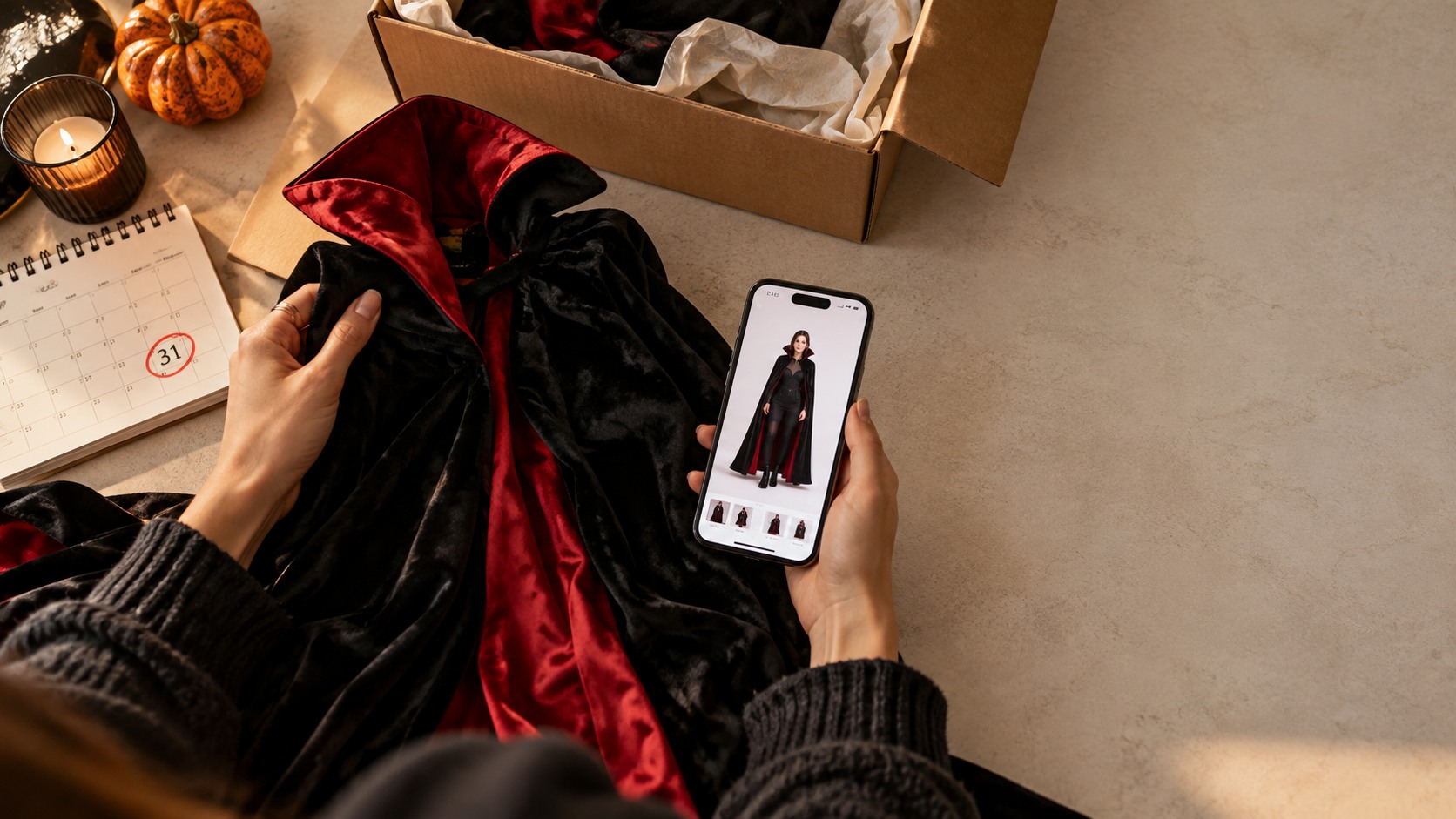
The gift is bought in November and returned in January

We handle returns for over 250 brands, and every November we see the same thing: well-written policies that stop working because the Christmas period breaks the calendar they were built on.
Your returns policy isn’t ready for December
Do the maths on a normal Black Friday order. Someone buys a gift on 28 November. It arrives on 2 December. They wrap it and put it away. On the 25th it gets opened by whoever receives it, and it turns out to be the wrong size or something they already had.
That person goes looking for your returns policy on 26 December. Twenty-four days have passed since the parcel arrived. With a thirty-day window, they just about make it.
Now run the same maths on someone who bought on 20 November, which is common enough when the campaign starts early. They don’t make it.
And the problem isn’t that customer, who’ll probably write in and end up getting an exception. The problem is the ones who never get as far as buying, because they do that same maths before paying and go somewhere else. Those don’t show up in any report.
The gift isn’t opened by the person who bought it
This is the fundamental difference with the rest of the year.
In a normal purchase, the person who pays is the person who receives it, tries it and decides whether to send it back. It all happens to one person and within a few days.
With a gift that splits in two. One person buys, another receives. And weeks can pass between the two, because the parcel gets put away until the 25th.
That has three practical consequences almost no policy accounts for.
- The first is the window, which we’ve already covered.
- The second is who’s allowed to return: if your policy requires the order number or the account it was bought with, the person who received the gift has neither.
- And the third is the refund, because sending the money back to whoever paid means telling that person their gift wasn’t wanted.
Of the three, the window is the only one nearly every brand fixes. The other two go untouched, and in our experience they’re the ones that cause the most friction in January, because they arrive as customer service issues rather than as normal returns.
Fourteen days is the law. Your customer has something else in mind
Two things get confused here and it’s worth separating them.
What the law requires in the EU is fourteen calendar days from the moment the customer receives the product, to withdraw from the purchase without giving a reason. In the UK the window is the same, even though the legislation is different.
That’s the floor. And it’s considerably lower than what the buyer has in their head.
Because most shops give thirty days, plenty give sixty and the big fashion names go as far as a hundred. So when someone looks at your policy and sees fourteen, they don’t think “they comply with the law”. They think you give less than everyone else.
And at Christmas that gap widens, because it’s when the buyer most needs room and when they’re most used to having it.
We’d put it like this: fourteen days is what protects you legally, not what makes you sell. They’re two different things and it’s worth not confusing them.
Extending the window without it costing you
The usual objection to extending the window is that more time means more returns. It’s the one we come up against most often when we discuss this with a brand.
What we see is something different: with a longer window the return arrives later, it doesn’t arrive more often. Whoever was going to return still returns. What changes is whether they do it within the window and through your portal, or outside it and by writing to customer service, which costs you considerably more.
And what you do lose with a short window is the sale. Someone who hesitates in November because the dates don’t add up doesn’t write in to ask. They leave, and you never find out.
That said, extending doesn’t mean extending everything. We’d separate out three decisions.
It’s no use if the customer sees your returns policy after paying
This is where most of the effect gets lost.
A brand extends the window, writes it into the terms page and considers the job done. But the customer doesn’t go to that page. They look at the product page, they look at the checkout, and they decide there.
According to our State of Returns report, 77.37% of shoppers check the returns policy before buying. And 93.43% say a simple process influences their first purchase from a brand.
For us that’s the important shift in thinking: the returns policy isn’t a post-purchase document, it’s part of the buying decision and therefore part of the product page. And if it’s buried in a terms page, as far as the customer is concerned it doesn’t exist.
To make this visible, we’d add it to the following parts of your ecommerce:
- On the product page, near the buy button and not in a dropdown at the bottom. One line does it: buy until 24 December and return until 15 January.
- At checkout, which is where the decision actually gets made and where most abandonment happens.
- In the confirmation email, because that’s the one people keep and the one whoever receives the gift goes looking for later.
- And in the banner or top bar of your site during campaign weeks, which is what anyone arriving cold will see.
The same shop doesn’t need the same policy for every product
Up to now we’ve talked about the returns policy as if there were only one. And that’s exactly the problem.
A shop in November is dealing with several situations at once. The new collection, which it wants to protect. The outlet, where the margin won’t cover return shipping. The Christmas gift, which needs a long window. And the customers who buy the most, who it might want to give better conditions to.
With a single policy you can only pick one of the four. Either you’re restrictive and lose gift sales, or you’re generous and end up paying for outlet returns that shouldn’t be costing you money. We see it constantly, and it’s almost always the second.
The rules editor in Global Returns solves that. Different conditions by product, category, purchase date or customer segment, within the same shop and without touching any code.
In practice that means you can have an extended window for anything your customers bought during the campaign, a normal one for the rest of the year, stricter conditions on outlet, and a segment with its own rules for your best customers. All at the same time.
Frequently asked questions
How many days does the law give me to return an online order?
In the EU, fourteen calendar days from when you receive the product, with no reason required. In the UK the window is the same. That's the legal minimum: most shops give thirty days or more because the minimum reads as stingy.
Should I extend my returns window at Christmas?
It isn't compulsory, but someone buying a gift in November assumes they'll be able to return it in January. A standard thirty-day window leaves out a good share of campaign orders, and the customer checks before paying.
Does a longer window mean more returns?
What usually changes is when the return arrives, not how many arrive. Whoever was going to return still returns. The difference is whether they do it within the window and through your portal, or outside it and by writing to customer service.
Where should the returns policy appear?
On the product page near the buy button, at checkout, in the confirmation email and in the banner during campaign weeks. If it only lives on the terms page, the customer won't see it before deciding.
Can you have more than one returns policy in the same shop?
Yes. With the rules editor in Global Returns you can set different conditions by product, category, purchase date or customer segment, within the same shop and without touching any code.