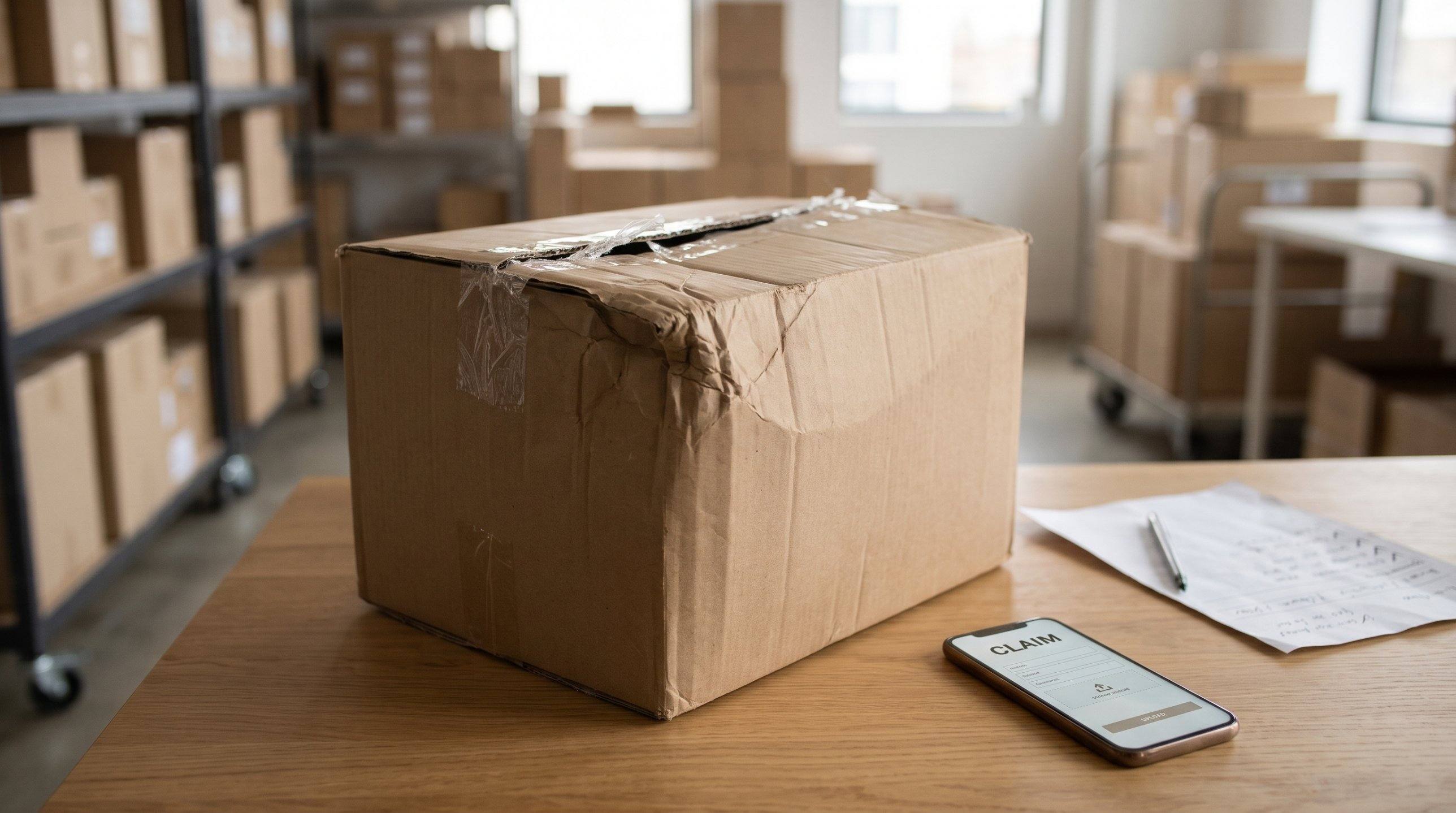
How to tell your customer their order is delayed

It’s eleven at night on 20 December and a customer opens her order’s tracking page for the third time. It’s a present and it has to be under the tree on the night of the 24th. But the order status hasn’t moved in four days. She closes the tracking page and goes to bed, hoping that by tomorrow the status will have changed and, with a bit of luck, the parcel will have moved on to the next stage, a little closer to home. The next morning she opens the tracking page again and nothing has changed. The brand isn’t updating the status, and it isn’t telling her what’s happening with her order either, so she decides to ask directly. By now there are two problems. Finding out where the order is, and whether the brand can answer quickly enough to help her.
This happens in every high-volume peak, like Black Friday, Christmas or the sales, and not because anyone did anything wrong. It’s precisely during those peaks that warehouses and carriers run at their limit, and without anyone wanting it, some orders are going to arrive late. The brand doesn’t decide that. What it does decide is how much visibility it gives that delay, because a customer you keep informed knows when their parcel will arrive and stops watching for it. And even if it does end up arriving late, they know the brand is doing everything it can to sort it out.
You take the blame for the delay even when it isn’t your fault
According to Sendcloud, 77.07% of European shoppers had a problem with their last delivery, whether a delay, a change of date, confusing tracking or a damaged parcel. And 42.46% hold the online store responsible for that problem, not the carrier that delivers it.
You can outsource the last mile, but in the end it’s your reputation that’s at stake.
And the real cost comes afterwards. According to Sendcloud, 29.06% of shoppers didn’t buy from the same shop again after a failed delivery. These are customers you’d already won, and they won’t buy from you again because they see you as responsible for what happened. It caused them real frustration, and it’s your reputation that pays for it.
What decides whether the customer comes back isn’t the delay
A day’s delay is almost never the problem. Hardly anyone stops buying from a brand because the order arrives on Thursday instead of Wednesday, and those who do have usually been looking for a reason for a while. So the delay is the trigger, not the reason.
What decides whether that customer comes back is two things.
- Whether they heard from you that the order was going to be late, before they had to ask and start worrying.
- Whether they knew what would happen if the parcel got lost or arrived much later.
And at this time of year there’s more at play than patience, because a good share of what’s bought on Black Friday is a Christmas present. A present that arrives on 26 December doesn’t have the same effect. It’s lost its magic. A customer who knows in time where their order is and when it’s arriving can still do something about it, like changing the address, redirecting it to a collection point or buying something else. One who finds out late, once the date has passed or the day before, has no room left.
What to say, when and where
What: four things, in this order
All four are written in the customer’s words. If the message is full of carrier order statuses, you’re handing your problem to someone who doesn’t know how to read it.
Of the four, the one that almost never gets included is the last, what happens if the parcel doesn’t arrive. And it’s the most reassuring, because nobody expects you to guarantee a delivery that doesn’t depend on you. What they want to know is that they won’t be left without their purchase and without their money.
Something similar happens with when they’ll hear more. Telling them you’ll email them an update on Thursday works better than promising the parcel for Wednesday and then it not arriving.
And remember that whatever you tell them has to be true. 94% of British shoppers name false delivery notifications among the most frustrating experiences they have, according to the November 2025 Locusstudy of 2,000 UK consumers surveyed through Censuswide. A notification that doesn’t hold up later does more damage than saying nothing.
When: as soon as the parcel stops updating
Most brands send a message once the delivery deadline has passed, and by then the customer has spent a day or two wondering where their order is. What matters is that it never gets that far, and that the customer never has to ask. You, as the brand, get ahead of it and tell the customer when a shipment has been in the same status for longer than usual, which is the first sign that something in the process isn’t moving as it should.
It’s worth separating two things here that often get confused. Telling them late is an apology. Telling them in time is information, and the customer takes it differently.
Where: wherever the order is
The right channel for telling them about the delay is the one the customer associates with their purchase. It has to come from the same place where they checked the tracking and from the same sender that confirmed the order. If the message comes from the carrier, with a different logo and a different tone, they read it as a third party writing to them about a problem that is really yours.
That explains a figure from the DHL eCommerce Online Shopper Survey 2025 that’s worth reading twice. 41% of European shoppers redirect their parcel to a collection point, and most of them do it from the carrier’s app or website. That traffic doesn’t go through the brand today, and the conversation goes with it.
The two delays that come up most in peak
Failed delivery
The driver tried to deliver the order and nobody was home. The parcel goes back to the carrier’s depot and stays there, waiting for another delivery attempt. A few days later, another one. And so on for a couple of weeks. The customer isn’t aware of any of this until they check the tracking again on their own.
That message has to go out the same day, and it has to let them do something about it, like choosing a collection point, changing the time or confirming the address. If you only tell them it failed, you’re just bringing their frustration forward a few days.
Wrong or incomplete address
A misspelled street, a missing flat number, a mixed-up postcode. The shipment stops, and the worst part is that often no alarm goes off. It simply stops moving. It can stay like that for weeks until someone asks.
That’s why checking the address before the parcel leaves prevents more problems than almost anything else. And if nobody is watching shipments that have been stuck for days, this is the one that takes longest to surface.
What has to be in place for the message to hold up
A delay notification only works if there’s something behind it. If you tell them and then can’t answer, or offer a way out that doesn’t exist, the message makes things worse instead of better.
A delay has three moments, and each one needs something different.
Telling them before they ask
With Smart Tracking, the tracking sits on your website with your branding, and the delay alert comes from you. The customer gets it where they expect to, and when they go to check, they land on your page. So if they decide to redirect the parcel to a collection point, they do it with you.
According to our data, proactive notifications cut “Where is my order?” contacts by 45%.
Answering the ones who ask anyway
There will always be someone who gets in touch even after you’ve told them. Tailor answers with the real status of their shipment, in your brand’s tone, without opening a ticket and without anyone on the team having to stop and reply. Over three weeks of peak, that’s the difference between a team that solves cases and one that spends the day reciting order statuses.
Claiming when the parcel is nowhere to be found
Some parcels simply disappear. Every carrier has a window for claims, and that window starts running when the shipment stops, not when the customer writes to you. By the time you find out, it has often closed.
With Carrier Claims, the stalled shipment is flagged within that window and the claim opens on its own, with nobody having to remember. That’s what turns the “what happens if it doesn’t arrive” in your message into something you can deliver on.
Frequently asked questions
When should you tell a customer about a delay?
When the parcel has gone longer than usual without updating, not once the promised date has already been missed. That’s the only window where you can tell them before they find out on their own.
What exactly should you tell them?
Four things. What happened, what you’re doing, when you’ll have more information and what happens if the parcel doesn’t arrive. The last one is the most reassuring, and the one almost nobody includes.
Should the notification come from the brand or the carrier?
The brand. 42.46% of European shoppers hold the online store responsible for a delivery problem, not the carrier, according to Sendcloud. The delivery may not be yours, but the problem is.
What do I do if the order never turns up?
Claim with the carrier within their window, which starts when the shipment stops moving, not when the customer writes in. If nobody watches for stalled shipments, many are spotted once they can no longer be claimed, and the cost ends up with the brand.
Doesn’t telling customers about a delay create more tickets?
Tickets come from uncertainty, not from the delay. A customer who knows what happened and when they’ll hear more doesn’t write in. One looking at a frozen tracking page with no explanation does.
How long do I have to make a claim with a carrier?
It depends on the carrier, but the window starts when the shipment stops moving, not when the customer gets in touch. That’s why it’s better to watch for stalled shipments than wait for the query. By the time the ticket arrives, the claim window has often closed.
Is it worth checking the address before dispatch?
It prevents more problems than anything else you can do before the parcel leaves. An incomplete address doesn’t usually trigger a visible exception. The parcel simply stops moving and can stay that way for weeks. Checking it before dispatch costs far less than tracking it down afterwards.