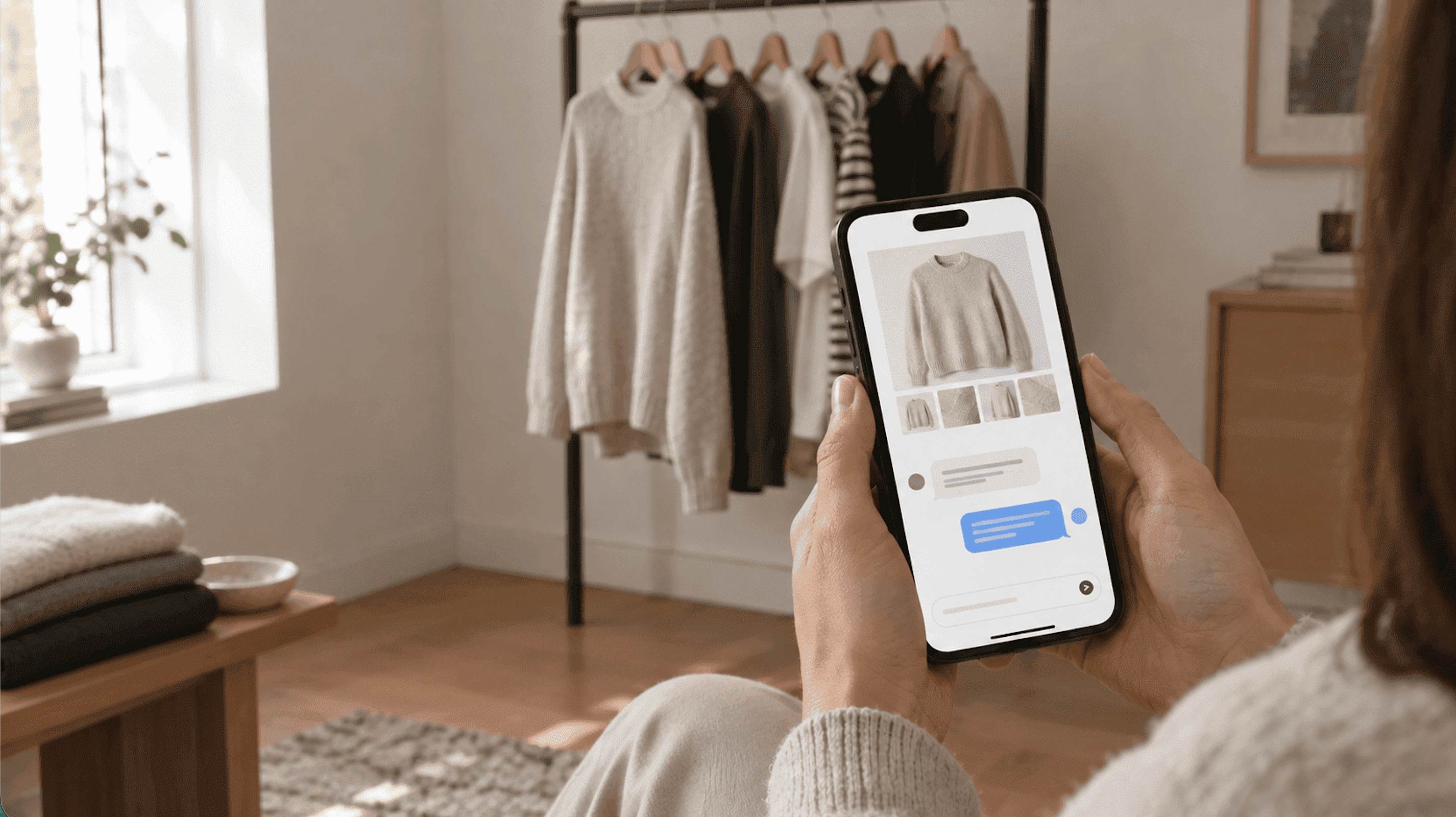
Almost half the clothing sold online comes back
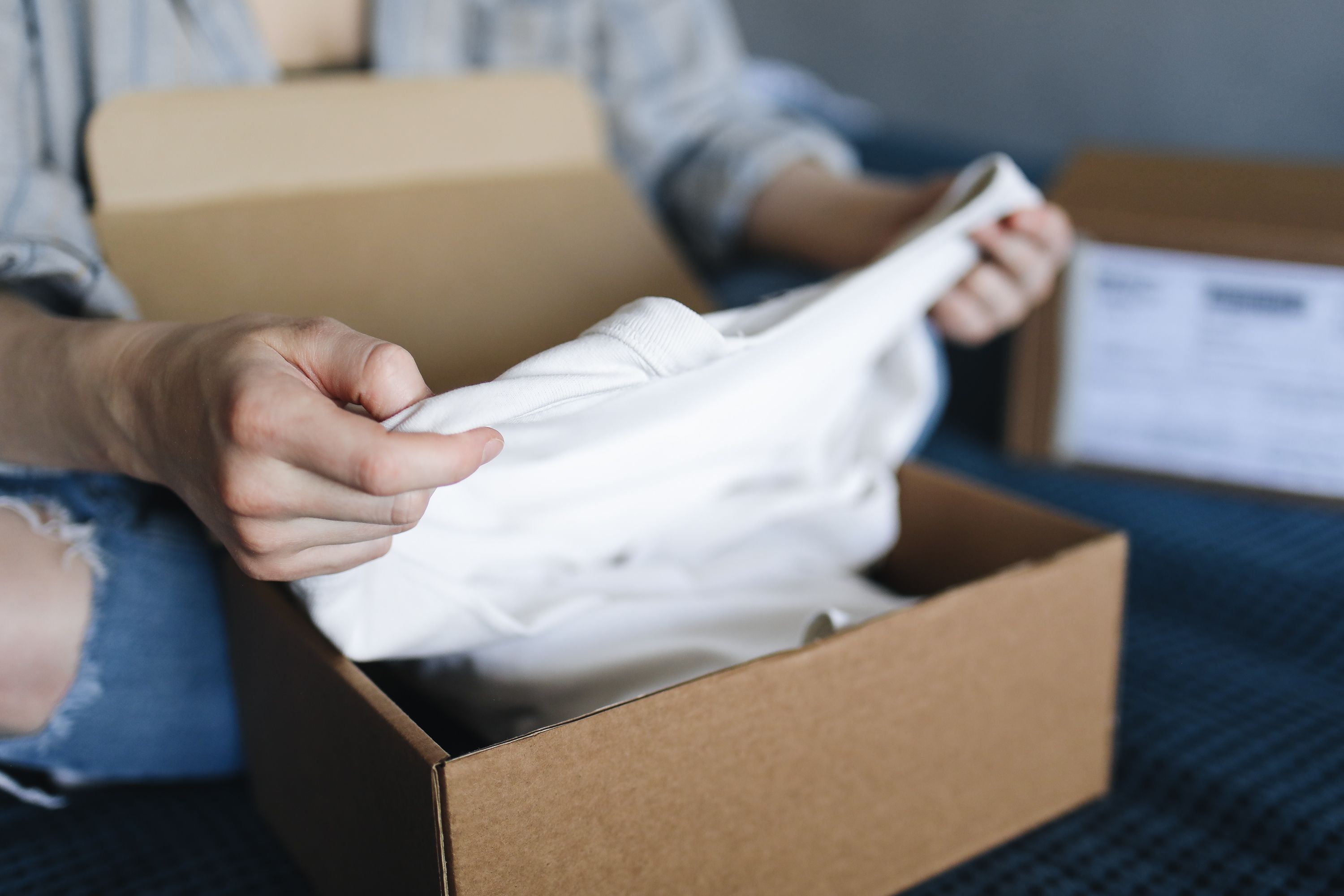
Fashion returns: a data-driven picture of the sector
Returns are one of the variables that most define fashion ecommerce today. They're not a one-off setback but a structural part of the online channel, with a growing weight on operations, logistics and the customer relationship. This report gathers the most relevant data on the sector, with a focus on Spain, the UK and Germany, to offer a clear picture of its scale, its causes, its evolution and the metrics brands are starting to prioritise.
How much gets returned
Fashion is the ecommerce category with the most returns. According to the IPC 2025 Returns Report, the average return rate is 46% for apparel and 39% for footwear. It's by far the category with the highest rate.
The gap with physical retail is striking, and the reason is structural: the customer can't try the item on before buying, so they move that fitting-room moment home, and the return becomes a natural step in the process.
Within Europe, markets don't behave the same way either.
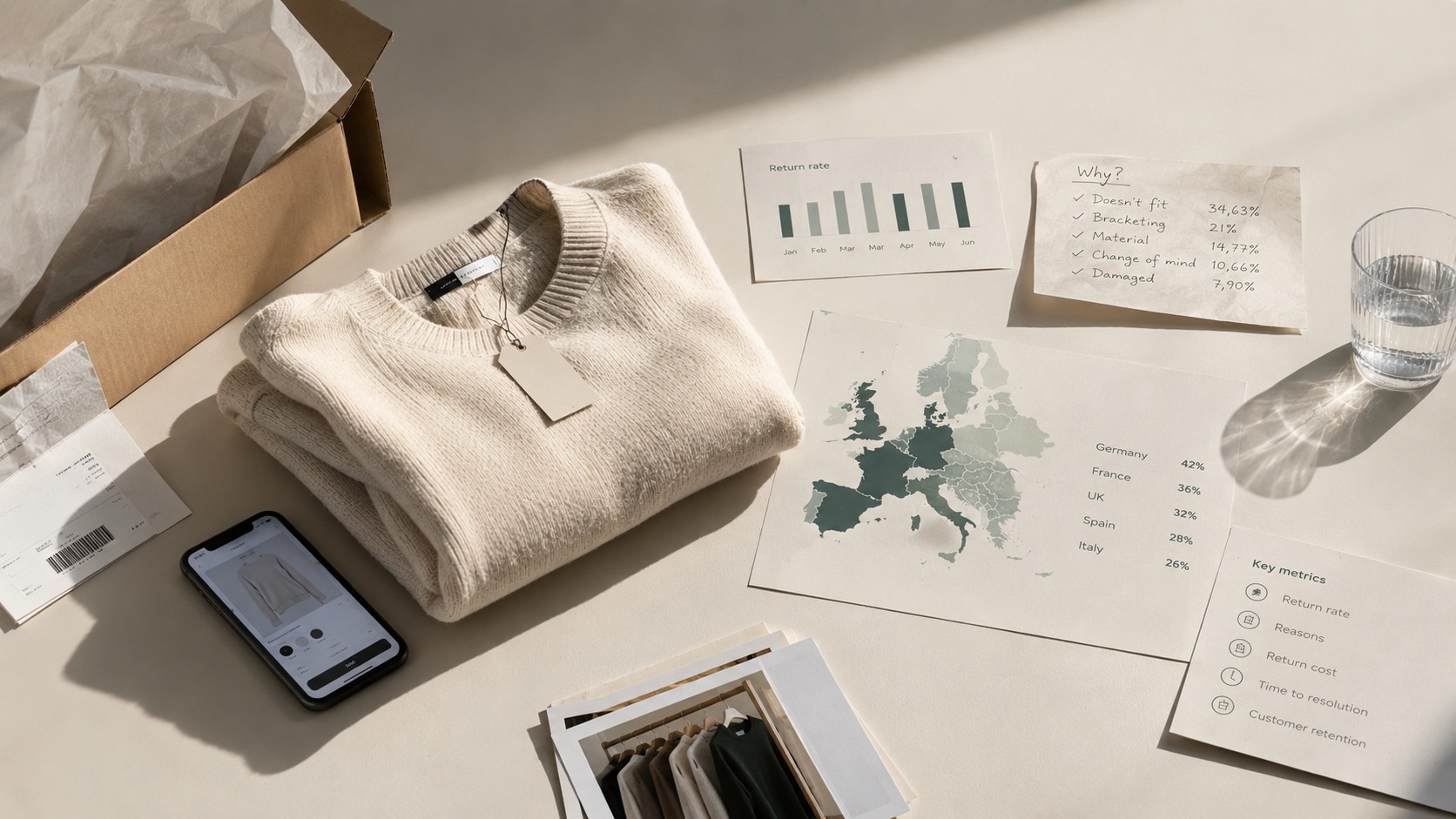
In Spain, 23.7% of non-food online orders end up being returned, led by clothing (31%) and footwear (27%), according to the returns benchmark report produced by Retail Economics across 2,000 households. In the UK, consumer surveys put the fashion return rate at around 30%.
Germany is the most extreme case documented, and also the only one measured on retailers rather than on shoppers. In a survey run by the EHI Retail Institute in summer 2025 across 124 online retailers in the DACH region, one in four fashion retailers reported return rates between 36% and 50%, and one in eight gets back more than half of everything it ships. In electronics, by contrast, 85.7% of retailers stay under 10%.
Far from being anomalies, those figures show what selling fashion online means today.
Why items get returned
The causes are well documented. According to our own State of Returns data, the most common reasons in fashion are the garment not fitting right (31.55%) and bracketing, ordering several sizes to decide at home (18.05%). Together, almost half of all returns come from the same unanswered question about size.
The rest splits between material that disappointed (14.92%), a description that didn't match the product (11.44%) and a straightforward change of mind (9.74%).
It's largely a question of pre-purchase information. Imprecise size guides, the lack of standardisation between brands and the difficulty of conveying how a garment falls or feels through a screen all mean the customer gets it right less often than they'd like. More than a product failure, it's a distance between what the customer expects to receive and what they actually get.
On top of this comes an increasingly widespread habit: buying several sizes or colours to keep one and return the rest. According to the Consumer Barometer published by KPMG and IFH Köln in December 2025, almost half of consumers deliberately order several items in order to choose. It isn't a problem with the product, but a sign of how the way people buy fashion online has changed.
How the returns experience matters
The way a brand handles returns has become a purchase-decision factor, not just an after-sales matter. More than 66% of consumers say the option to return free of charge positively influences their decision to buy. Returns policy therefore enters the purchase decision itself, even before the order is completed.
Speed matters too. According to the EHI, 43.4% of retailers process a return within one to two days, and another quarter take three to four. Every day a garment spends in transit or waiting to be processed is a day it isn't available to be resold.
And in fashion that time carries a direct cost. It's a seasonal sector, where the product loses value at the pace of markdowns while it makes its way back.
The cost isn't marginal either. The IPC report puts the price of processing a single return at up to 15 euros per parcel, between 20% and 40% of the item's original value.
Our own data points the same way. Across the merchants using instant refunds, where the customer gets the money the moment they request the return, we've seen repurchase rates rise by 35%.
Which metrics brands watch
Although the return rate is the most cited metric, it's also one of the ones that offers the least room to act on, because it depends largely on the category and on customer habits like bracketing. Setting targets on that figure alone can lead to the wrong conclusions, and not only because of differences between categories.
A low return rate isn't always good news. It can mean the customer bought exactly what they wanted, but it can also hide the opposite.
The KPMG data shows it clearly: 36% of consumers keep a product when the return process is too complicated. The process can be so convoluted that the customer gives up, keeps something they didn't want, and decides never to buy from that brand again.
In the first case, the brand gains a repeat customer. In the second it loses them for good, even if the metric looks positive.
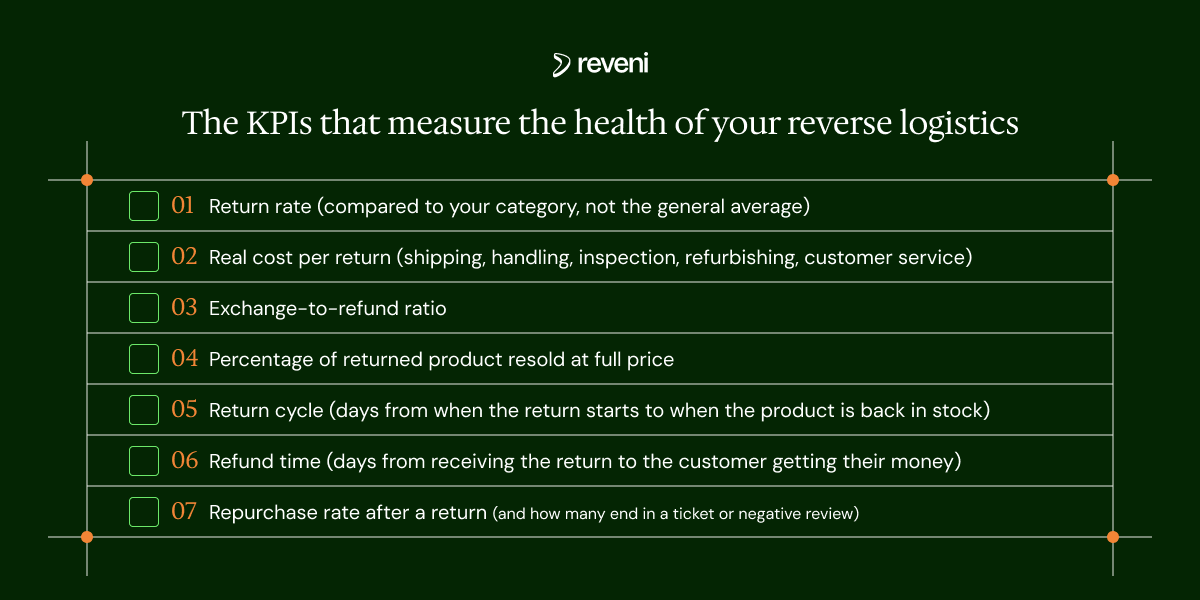
That's why more and more brands complement that figure with others that give a more operational and financial reading: the real cost of processing each return, the share resolved as an exchange rather than a refund, the repurchase rate after a return, and the total time it takes for the product to become available again.
An underlying trend
The data points in a clear direction: returns in fashion are structural and won't fall significantly on their own. They're part of how today's consumer shops, in a context of fast shipping, flexible policies and habits like bracketing that are increasingly entrenched.
Against that backdrop, the sector's focus is shifting. It's no longer about avoiding returns at all costs, which clashes with the nature of the category, but about managing them better.
Because a well-resolved return isn't the end of the process. It's one more chance to keep the connection with the customer and get them to buy again.
For more on how to turn the post-purchase into a loyalty lever, we go deeper in our loyalty guide.